GENERAL INFORMATION
HEADQUARTERS: Via Tommaso Pendola - Terzo di Città
SOCIETY: "M.S. Castelsenio" - Piazzetta Silvio Gigli
NAME OF THE CONTRADA MEMBERS: Tartuchini
MOTTO: "Strength and perseverance hotel"
COAT OF ARMS: a tortoise on a field of gold scattered with blue Savoy knots alternated with natural daisies
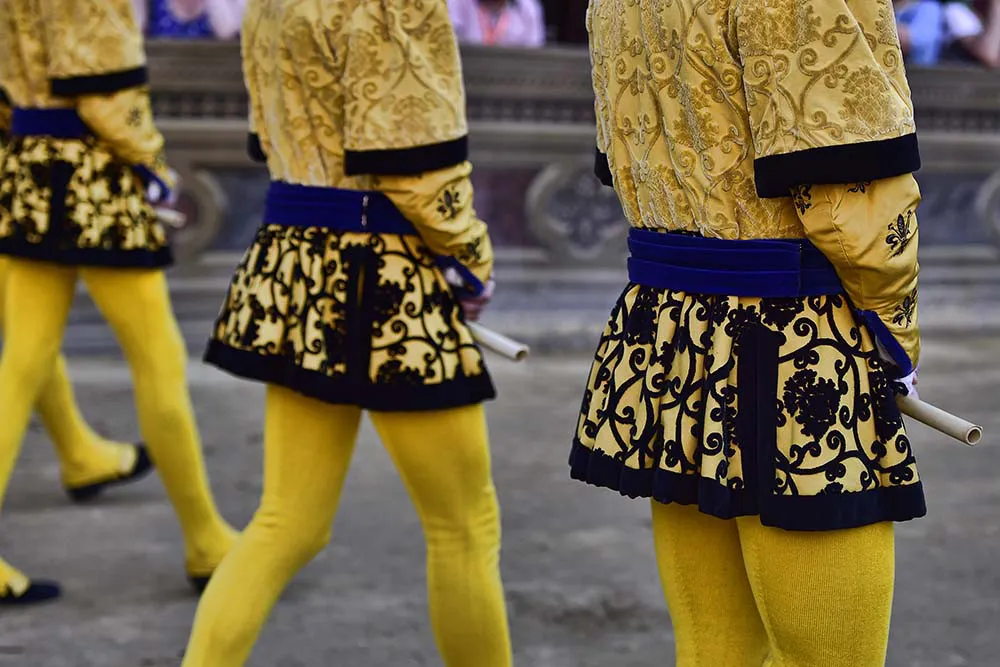
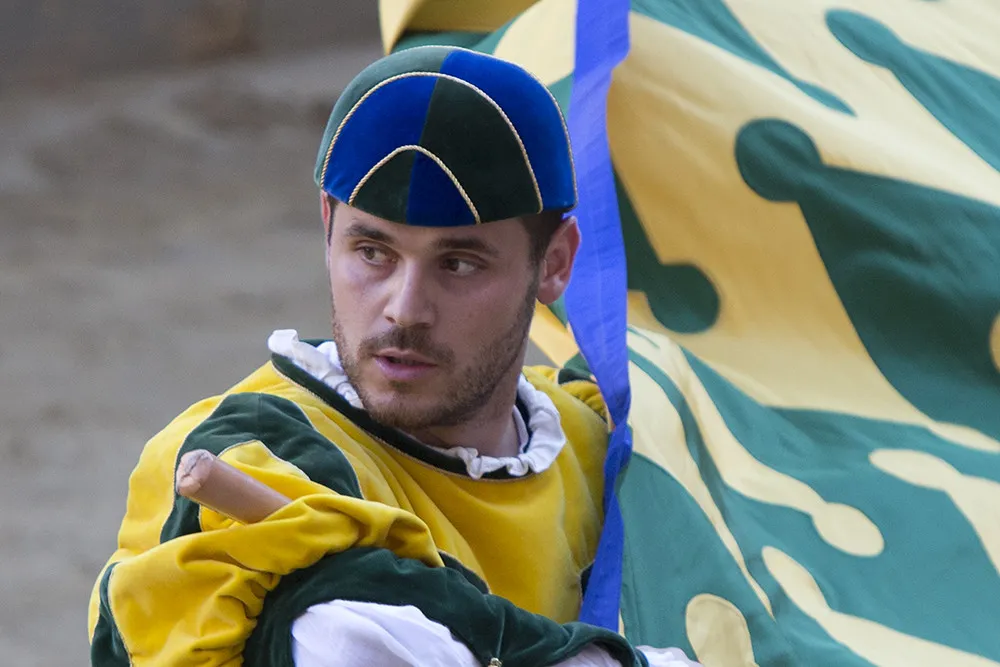
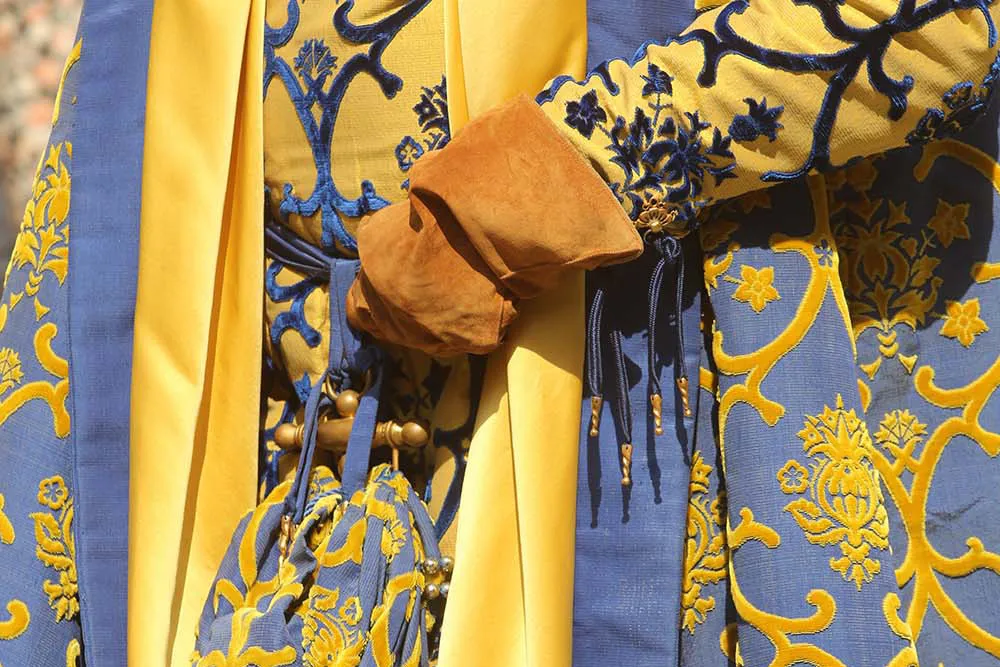
COLORS: yellow and blue in equal parts
SYMBOLIZES: steadfastness and determination
PLACES AND REFERENCES
CHURCH AND ORATORY: Oratory of Saint Anthony of Padua, known by the contrada members as "Saint Anthony at the Murella"
PATRON AND TITLE FESTIVAL: Saint Anthony of Padua - June 13, generally celebrated on the third Sunday of June
MUSEUM: Via Tommaso Pendola, 21
FOUNTAIN: Work by the sculptor Bruno Buracchini (1951), located on Via Tommaso Pendola.
RELATIONS AND ORGANIZATION
RELATIONS WITH OTHER CONTRADE:
allies Leocorno, Nicchio, Onda, Selva
enemies Chiocciola
CORPORATIONS: Masters of Stone
MILITARY COMPANIES: Porta all'Arco, Saint Agatha
HISTORY OF THE CONTRADA DELLA TARTUCA
The Contrada della Tartuca was founded in the 16th century, in the historic area of Castelvecchio. It seems to have officially originated from the union of two Military Companies: that of Porta all'Arco and that of Saint Agatha. The original colors were yellow and black.
Over the centuries, the Contrada has consolidated its identity, culminating in the creation of the church now known as Oratory of Saint Anthony of Padua, dedicated to the patron saint of the contrada.
PALII AND RESULTS
WON PALII: 49
PARTICULARITIES
TWINNINGS: Trento