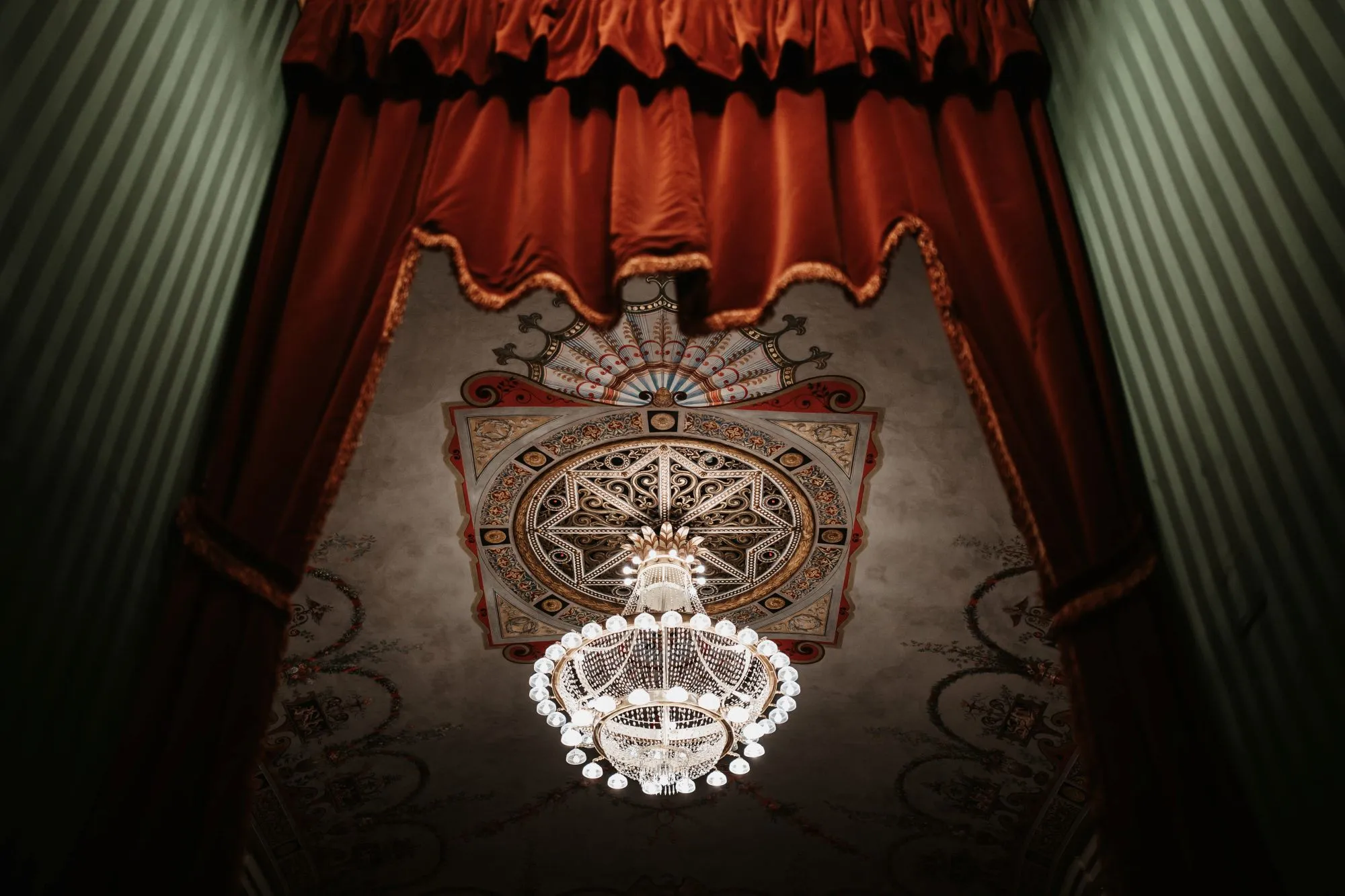
A theatre born in the heart of power
Few theatres in the world can boast such an origin. The Teatro dei Rinnovati does not rise in just any building: it is born within the Palazzo Pubblico, overlooking the most beautiful medieval square in Europe, Piazza del Campo. A place where the history of Siena has been written for centuries, and where the curtain still rises today.
It all begins in 1343, when the Sala del Consiglio Maggiore is built. But it is in 1560, during the visit of Cosimo I de' Medici, that the hall transforms into a permanent theatre: the setup is curated by Bartolomeo Neroni known as "il Riccio", and the Hortensius by Alessandro Piccolomini is staged. A debut worthy of a city that knew how to do things grandly.
Centuries of history, fires, and rebirths
Rivalries, mergers, and masonry stages
In the Seventeenth Century, the theatre became a stage for cultural rivalries: the Intronati, after almost fifty years of prohibition, resumed activity in 1603, finding themselves competing with the Accademia dei Filomati. In 1654, by order of Mattias de' Medici, the two academies were merged and the theatre returned to the Intronati. In 1667, a new reconstruction arrived with masonry stages in four tiers in a U-shape, inaugurated in 1670 with the opera L'Argia.
The fires and Antonio Galli Bibbiena
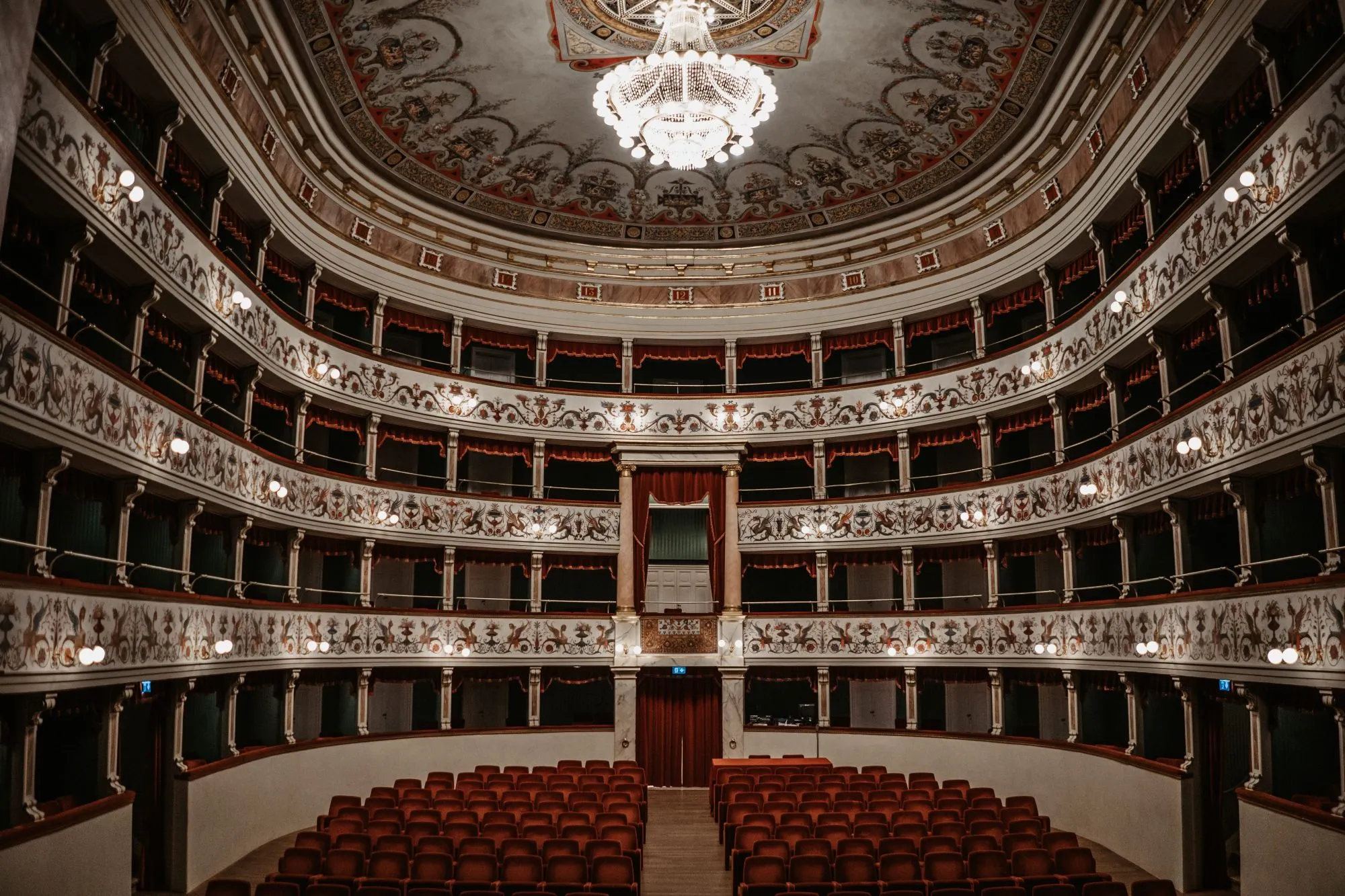
The Eighteenth Century was a century of fire, literally. A first fire on September 7, 1742 destroyed the theatre; a second on July 31, 1751, during the performance of Antigone. It was then that the genius of Antonio Galli Bibbiena came into play, commissioned in 1752 for the reconstruction. His project, bell-shaped plan, proscenium with double trunk of giant Corinthian columns, curved connection with the boxes, is still recognizable today. On July 8, 1753, the theatre reopened with Tito Manlio, amidst great applause for scenographies, lighting, and architecture.
The Rinnovati and the new century
In 1798, an earthquake severely damaged the theatre. Economic difficulties forced the Accademia degli Intronati to sell the boxes. In 1802, the Accademia dei Rinnovati was born, with the motto "I change the old and take the new mantle" and a coat of arms with a serpent: a name, a symbol, and a promise of continuity.
The theatre today
After the declaration of uninhabitability in 1927 and the transfer to the Municipality in 1935, the theatre went through difficult years interrupted by war. The reopening in September 1950 for the Settimana Musicale Senese marked the return to life.
The most recent chapter is the major renovation 2004-2009, directed by architect Ettore Vio: over 600 seats, 88 boxes, expanded foyer, new accessible entrances, stage adapted for dance, mystical gulf expanded, and restored nineteenth-century decorations. On June 3, 2009, the reopening with Gli Ingannati, symbol of the sixteenth-century Sienese theatre, closed a circle lasting almost five centuries.
Come listen
The Teatro dei Rinnovati is one of the most extraordinary places to experience a show in Italy: history, beauty, and acoustics in a unique embrace.
Palazzo Pubblico, Piazza del Campo, Siena.