The gateway to the world towards Siena
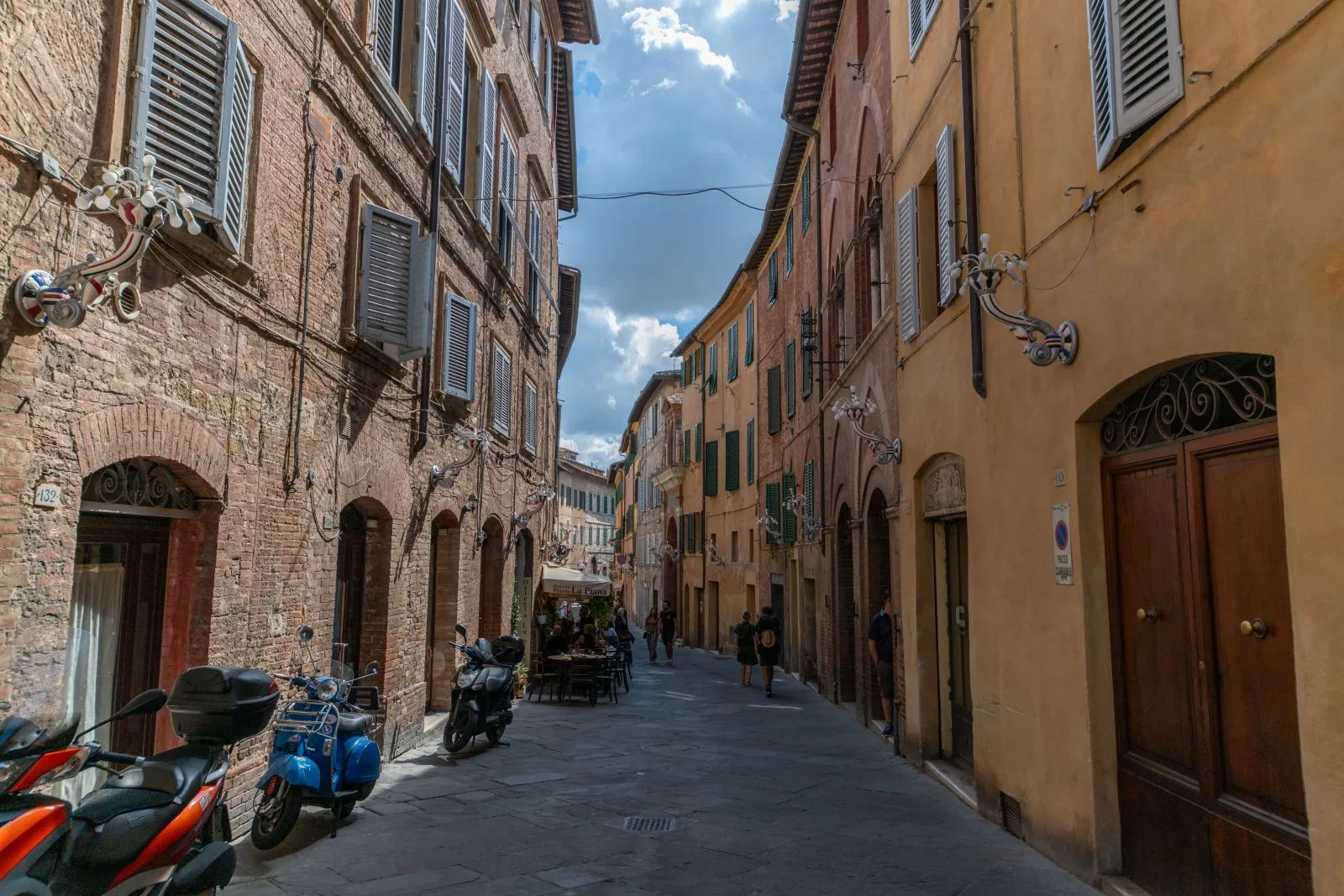
There is a road in Siena that has seen everything pass by: pilgrims heading to Rome, merchants laden with goods, armies on the march, ambassadors on visits, Florentines as enemies, and travelers of every language and origin. It is called Via Camollia, and it is the backbone of the Terzo di Camollia, the artery that connects Porta Camollia — the northern entrance of the city — with the heart of the historic center, flowing into Via Montanini, Banchi di Sopra, and then towards Piazza del Campo.
Everything begins with that door and with those words engraved on the arch: "Cor magis tibi Sena pandit" — Siena opens a heart larger than the door to you. A message of welcome directed to anyone arriving from Florence and the north, after days of walking along the Via Francigena. An invitation that has lasted for centuries and is still felt today, walking along this road.
A legend in the name
The name "Camollia" carries with it a fascinating legend. According to tradition, Camulio, the nephew of Remus, was sent to found a settlement right in this area. From "Camulio" would derive "Camollia": one of the many threads connecting Siena to the founding myths of Romulus and Remus, to the legend of a city born from the blood of Rome.
What the road tells
Palaces, churches, and Templars
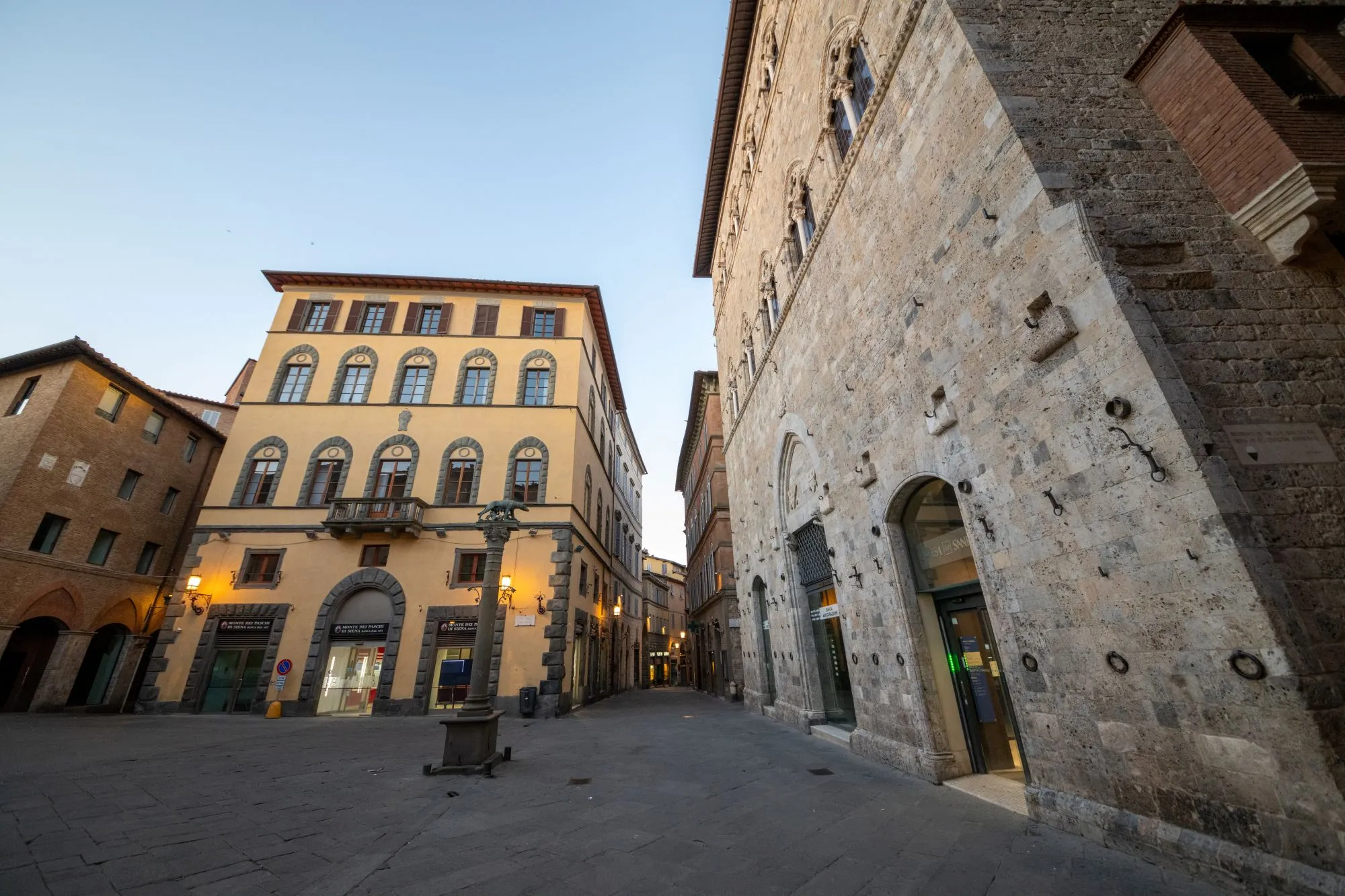
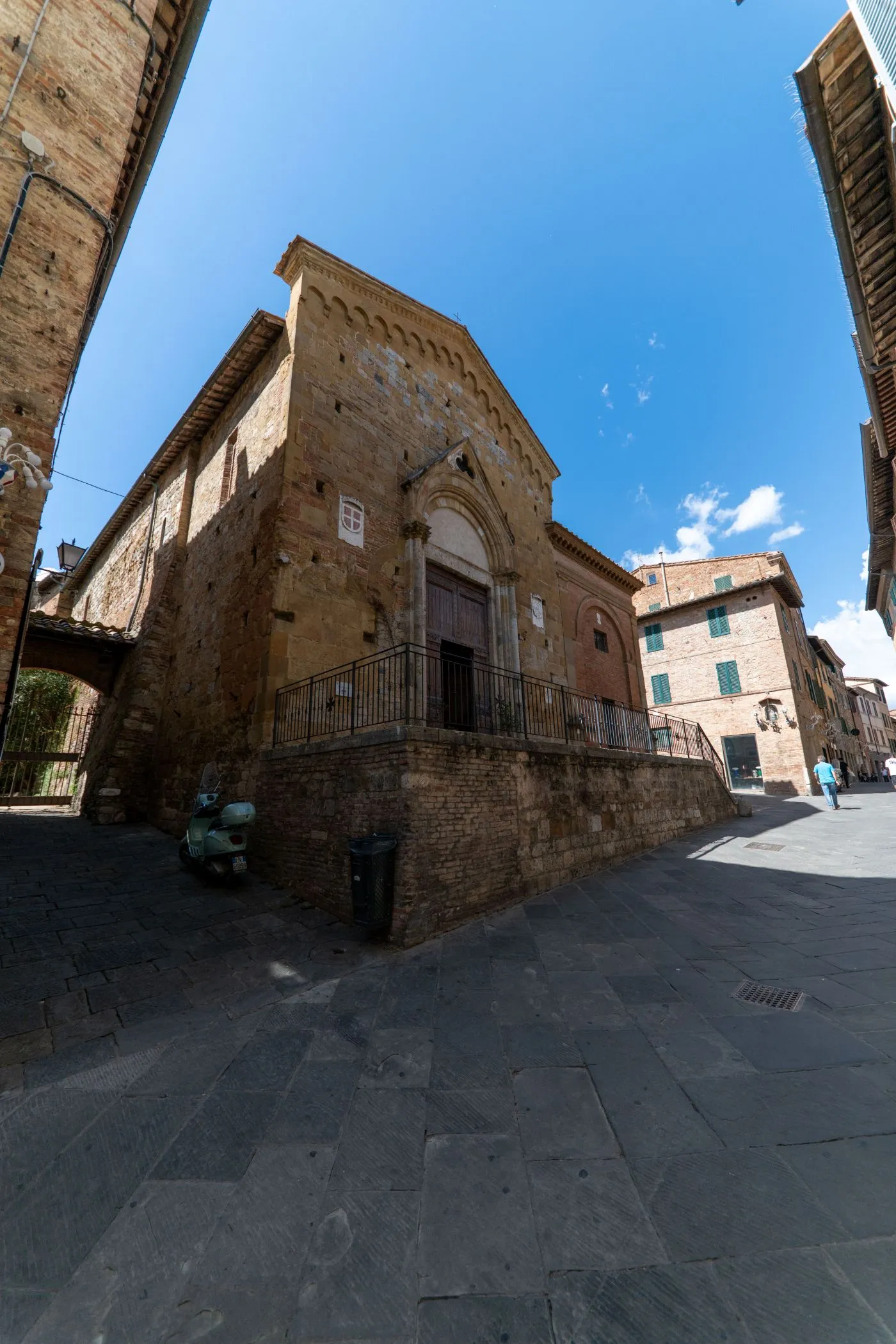
Along Via Camollia, one encounters historic palaces with Gothic arches, medieval windows, and coats of arms of noble families, oratories and places of worship that recount centuries of popular devotion. Among them, the Church of San Pietro alla Magione stands out, linked to the Knights Templar and a fundamental reference point for pilgrims traveling along the Francigena. A place that still bears the weight of that ancient passage.
The "Florentine" road and its defenses
Via Camollia was the entrance through which the Florentines, historic enemies of Siena, arrived. For this reason, the area was heavily defended and controlled: a boundary not only physical but symbolic, between two cities that have eyed each other with suspicion for centuries. That tension has shaped the architecture and history of this part of the city.
Inns, taverns, and street life
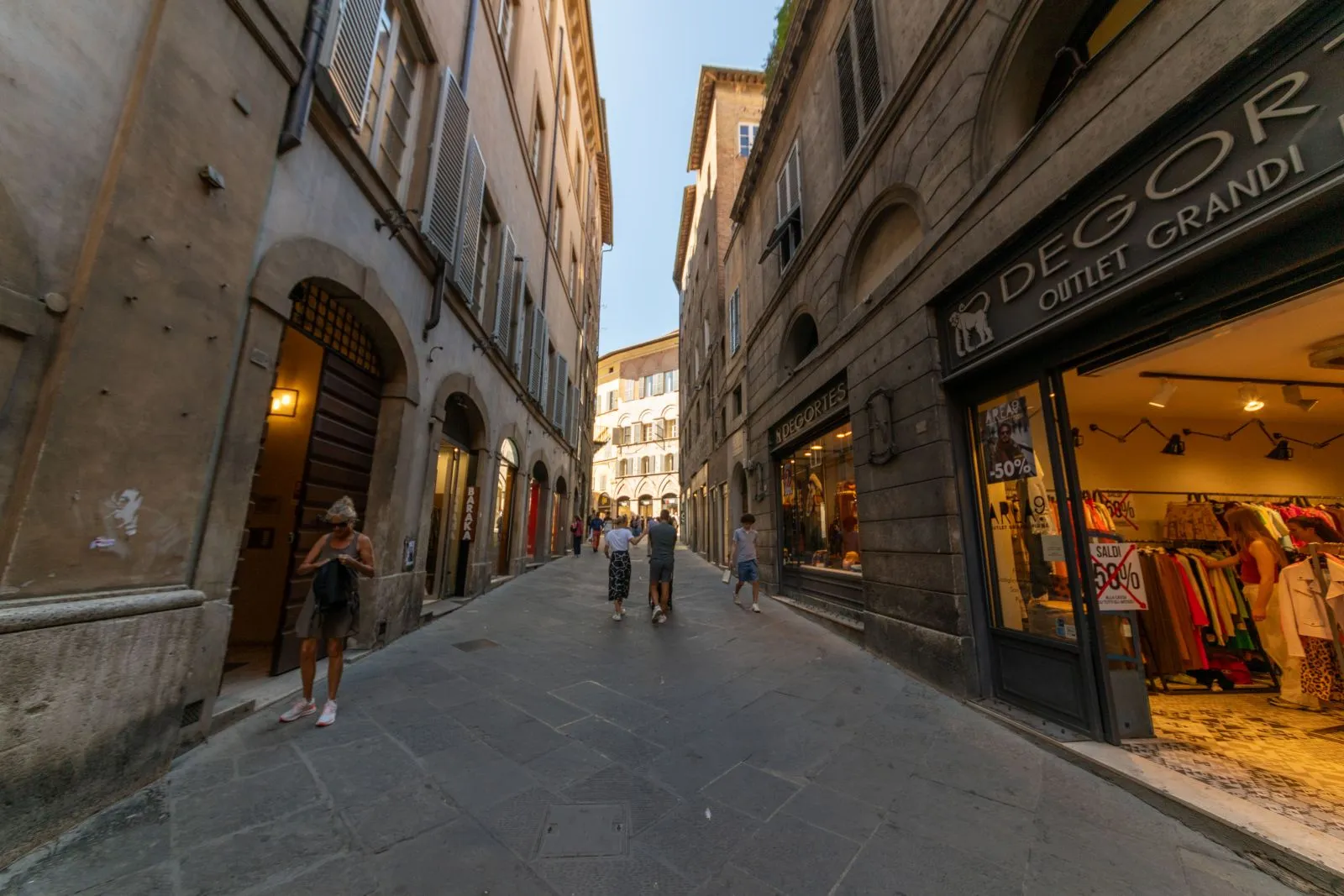
For centuries, the road has been dotted with inns, taverns, and post stations: places where travelers would stop, eat, sleep, and depart. An economy of hospitality that has made Via Camollia one of the most vibrant and cosmopolitan streets in Siena. Even today, it maintains this vocation: historic shops, workshops, traditional activities that keep an authentic atmosphere alive.
Come walk it
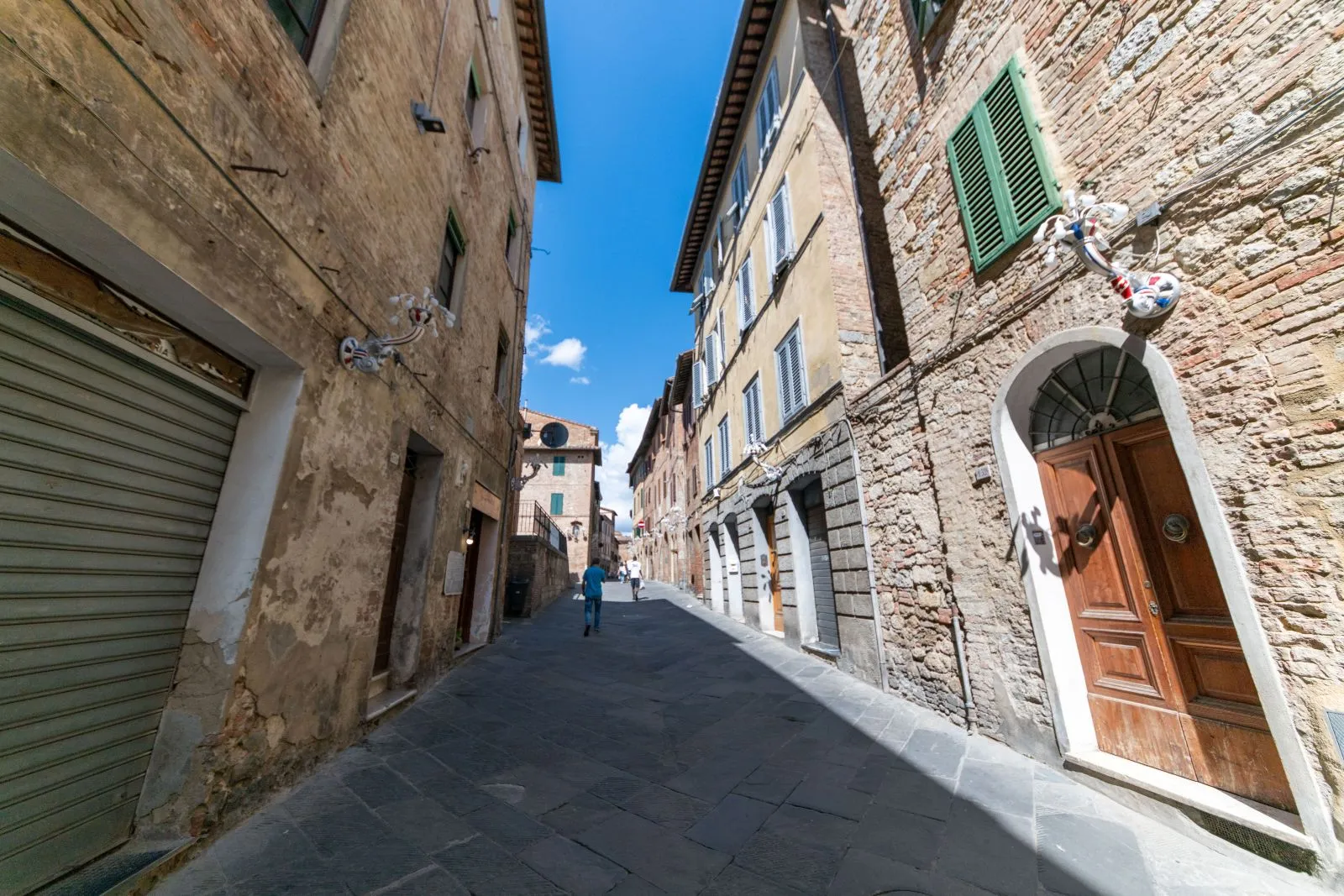
Enter through Porta Camollia, read the inscription, walk to the center. Via Camollia is not visited: it is traversed, one step at a time, letting every palace, every arch, every stone tell its story.
From Porta Camollia to the historic center, Terzo di Camollia, Siena.