A detour worth the journey
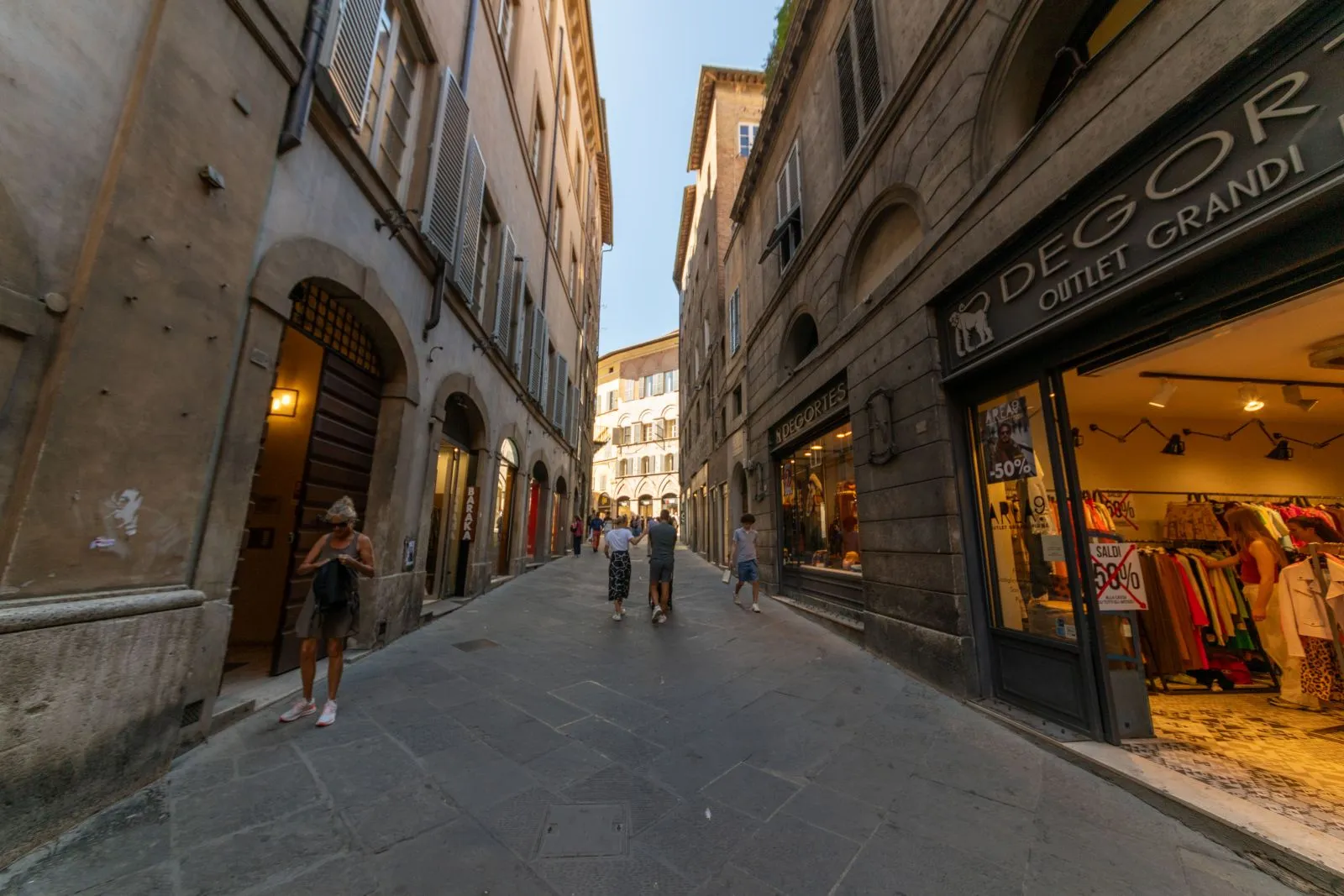
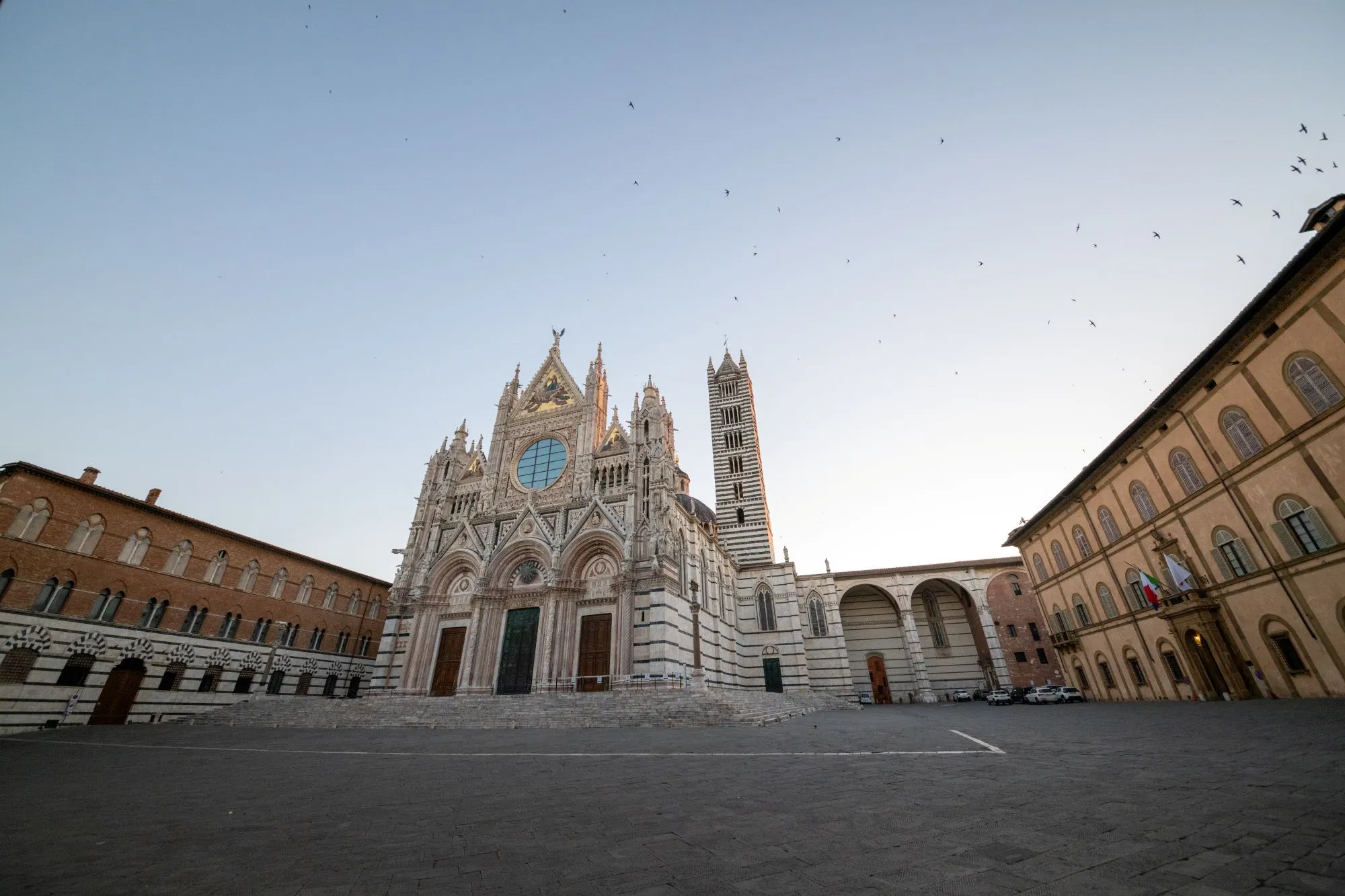
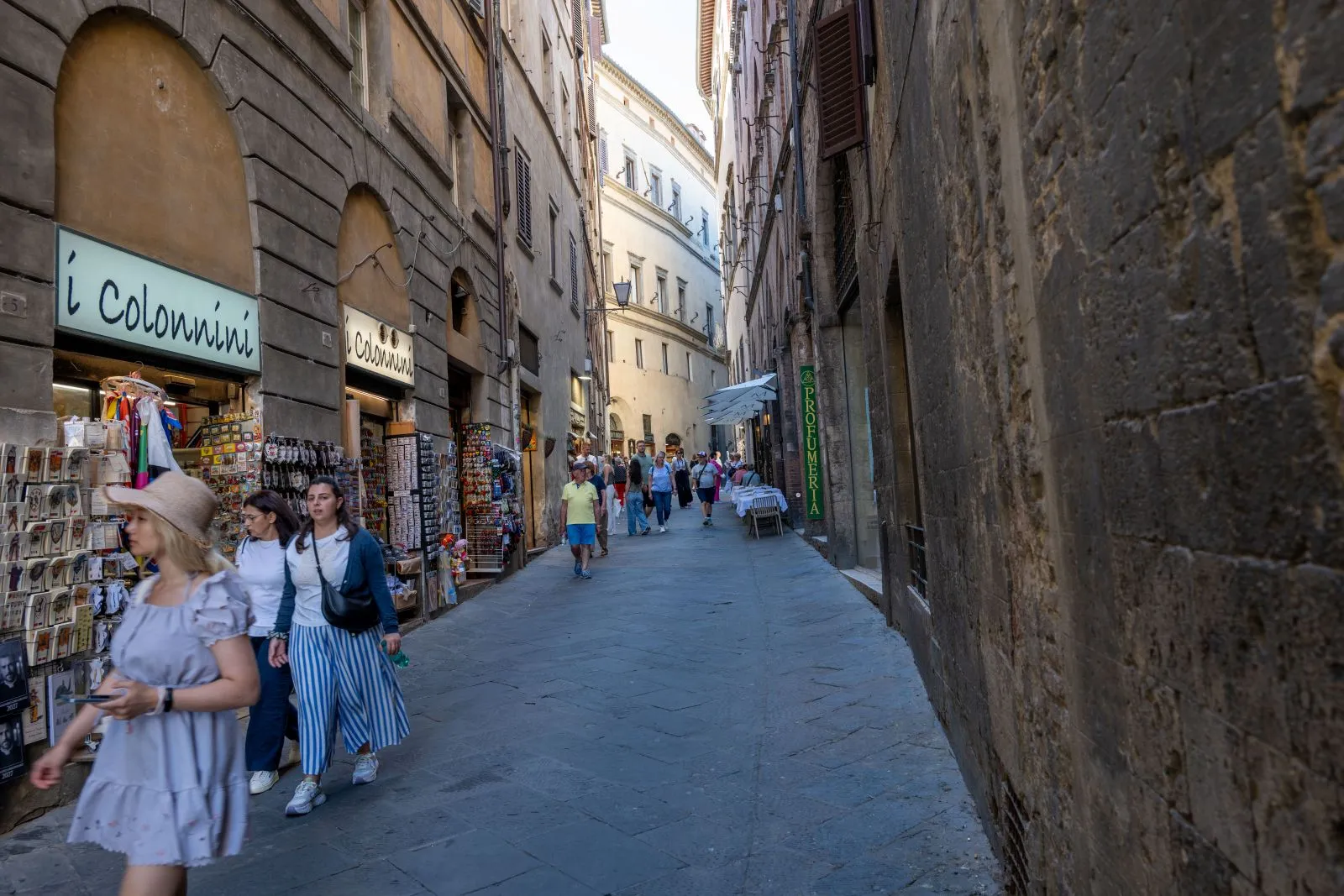
In the Third of the City, every step on Via dei Pellegrini is a step that thousands of people have taken before you. Its name comes from those who, centuries ago, deviated from the Via Francigena to reach the Duomo of Siena, leaving the great path that crossed the city from north to south to head towards its religious heart. Just a few steps today. But by walking them, you traverse the same path that thousands of pilgrims have taken before, with the same destination in their eyes.
The Palace that dominated the street
Palazzo del Magnifico and the frescoes that are no longer there
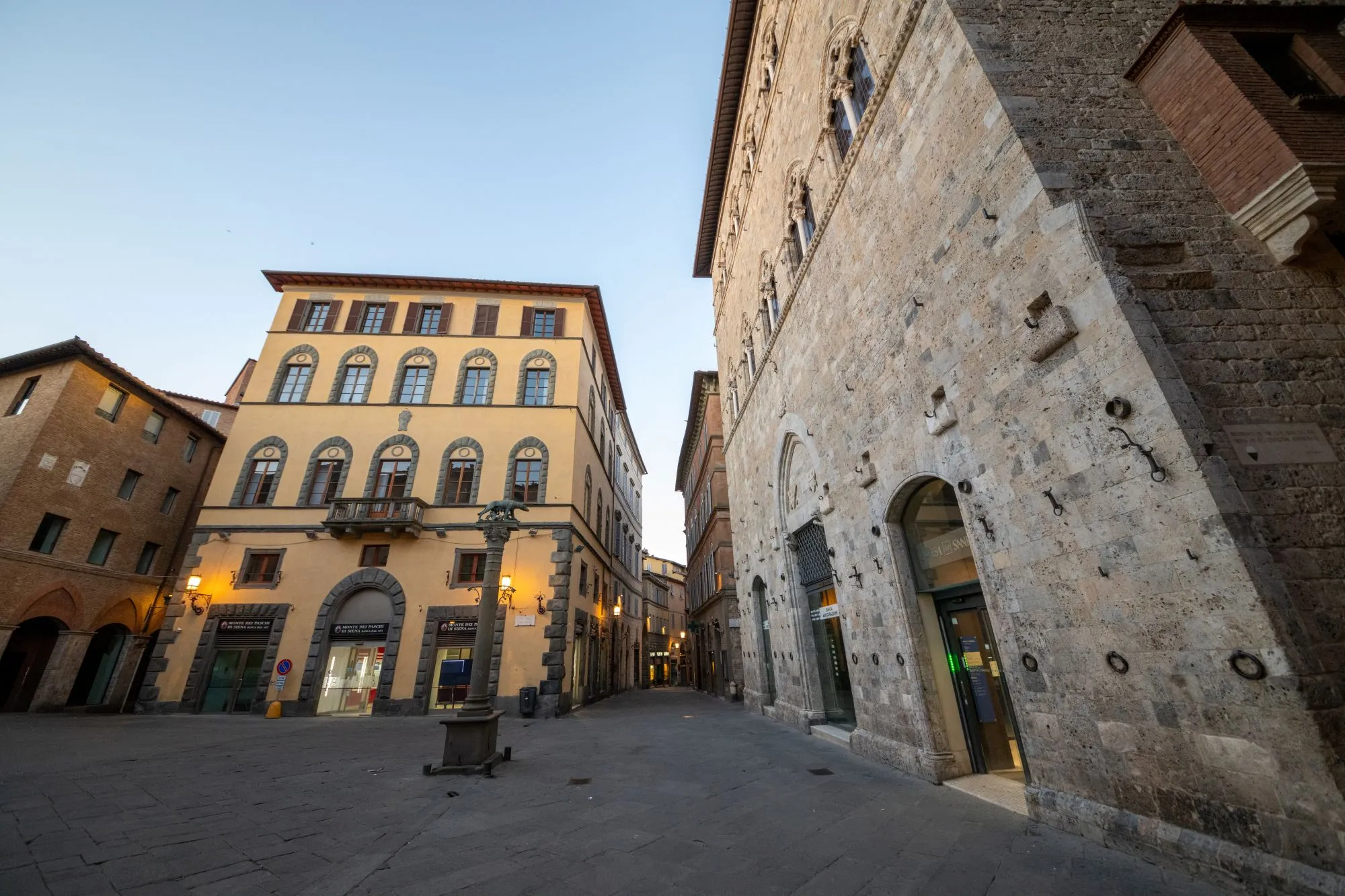
At the corner with Piazza San Giovanni, one stops in front of the famous Palazzo del Magnifico, built in 1508 for Pandolfo Petrucci, lord of Siena. Looking at the facade, it is hard to imagine what it once held: an extraordinary cycle of frescoes, signed by Pinturicchio, Luca Signorelli, and Bartolomeo Genga. Today those works live far away, scattered in international museums, and the facade remains there, silent, guarding only the memory of that splendor. Petrucci did not choose this street by chance: he wanted to overlook a road of great traffic, as if to say to anyone passing by that he was in charge here.
An arch, two symbols, one gaze only
Fontebranda and San Domenico in the same glimpse
Continuing to the intersection with Via Jacopo da Diacceto, an arch frames something that stops the step. On one side Fontebranda, the most famous medieval fountain of Siena. On the other, on the opposite hill, the Basilica of San Domenico that dominates the landscape with its imposing bulk. Two different symbols of the same city, enclosed in a single glance, as if the one who designed this street wanted to give those who walk it one last surprise before the end of the path.
A crossroads that has seen all of Europe pass
Palazzo Ciani and the legacy of the Fourteenth Century
Along the way, one also encounters Palazzo Ciani, dating back to the second half of the 14th century, another fragment of Sienese architecture that endures among the stones of the street. Siena was a fundamental stop on the Via Francigena, and the pilgrims who stopped here found hospitality and care at the nearby Santa Maria della Scala, one of the oldest hospitals in Europe. This street was therefore a mandatory passage, crossed by those seeking the Duomo to pray or the hospital to be treated.
Nobles, merchants, kings: who walked here before you
Along these few meters passed people from every background: nobles, merchants, clergy, artists, the poor, and kings. Siena was a European crossroads, and Via dei Pellegrini is a living testimony of it, even today. The proximity to Santa Maria della Scala made the area a meeting point between Sienese and foreigners, and many religious orders offered hospitality to those arriving tired from the journey, before letting them depart again towards the Duomo or the rest of the world.