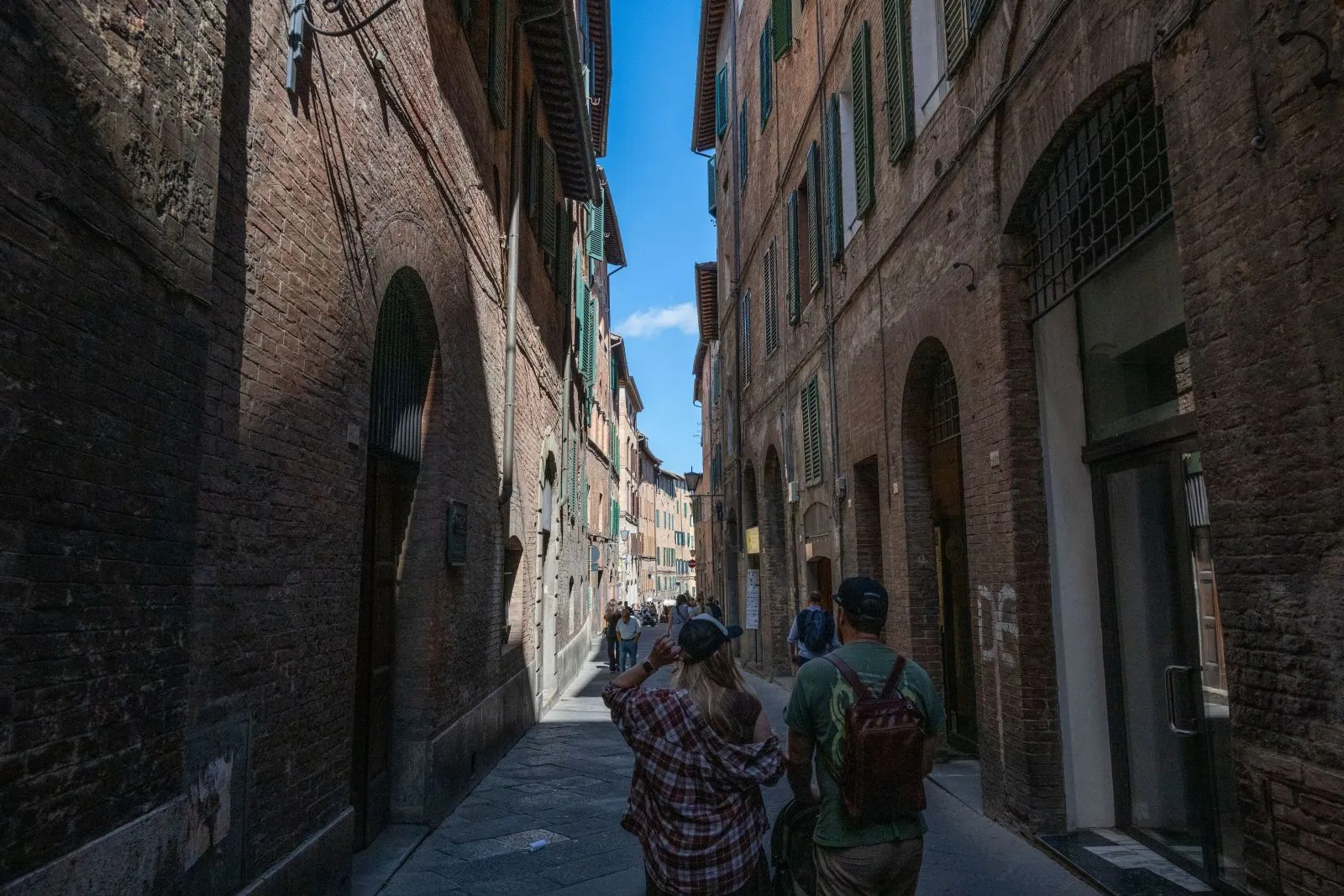
Origin and historical context
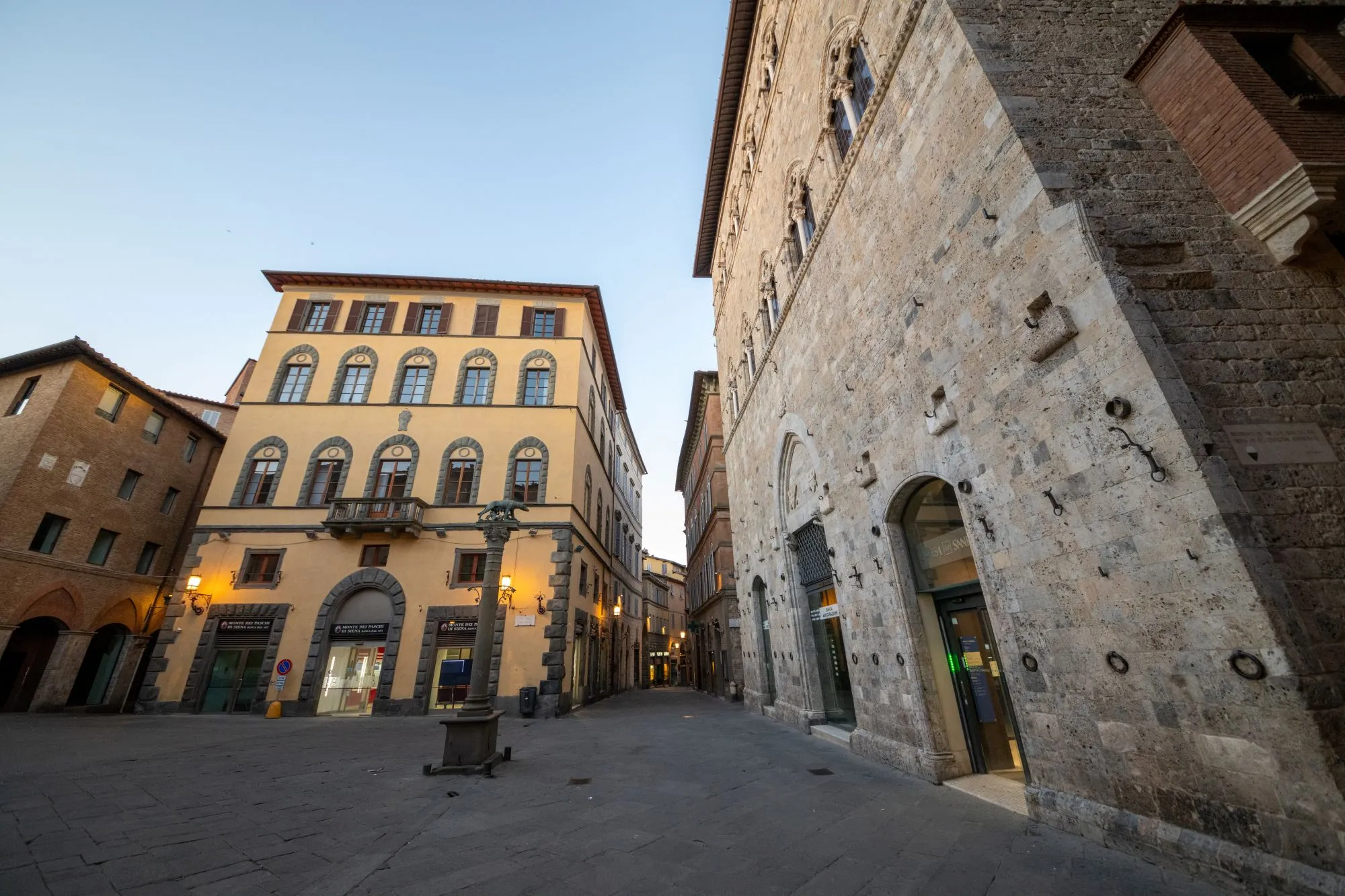
Via dei Rossi takes its name from the noble family of the Rossi, who owned numerous properties in the area, including the Castellare dei Rossi, now integrated into the Palazzo Bichi Ruspoli.
The street connects Banchi di Sopra to Piazza San Francesco and belongs to the Terzo di Camollia, one of the three historic sectors into which Siena was divided. In the Middle Ages, it was traversed by artisans and workshops, serving as a link between residential and commercial areas.
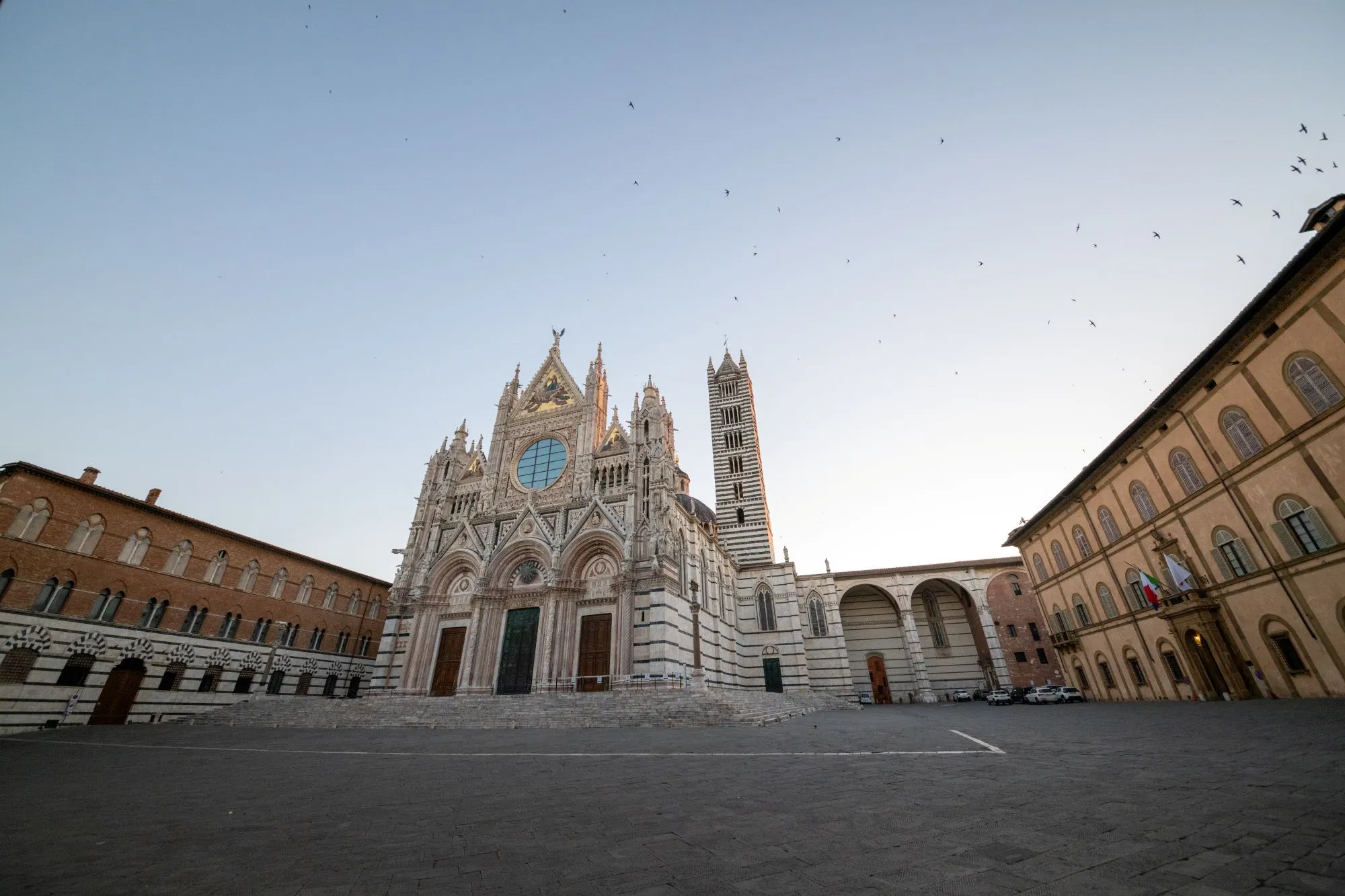
The path leads to Piazza San Francesco, historically the center of religious life and the town. The street has maintained its medieval layout even in the Renaissance and subsequent centuries, continuing to be an active artery of the city.
The street today
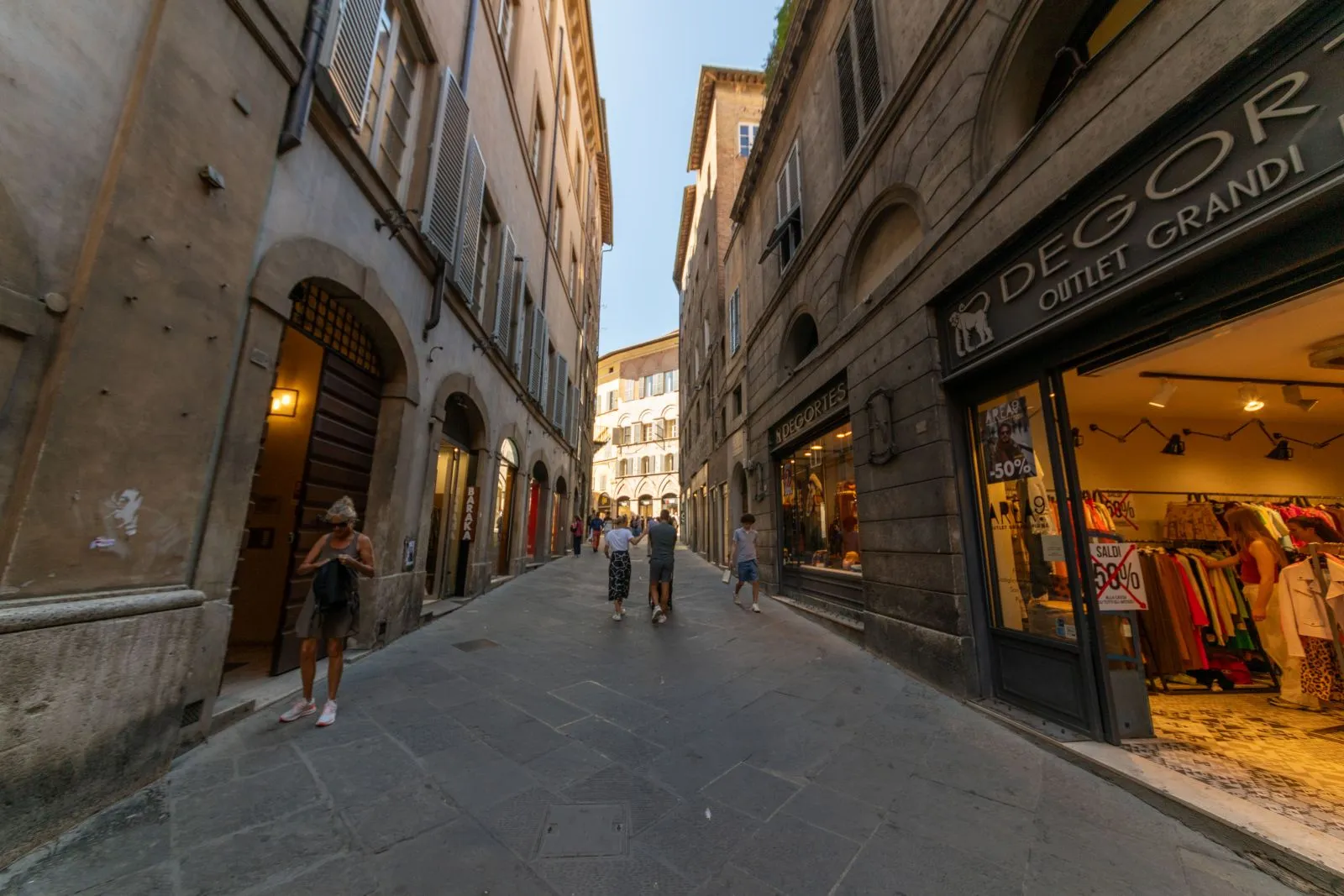
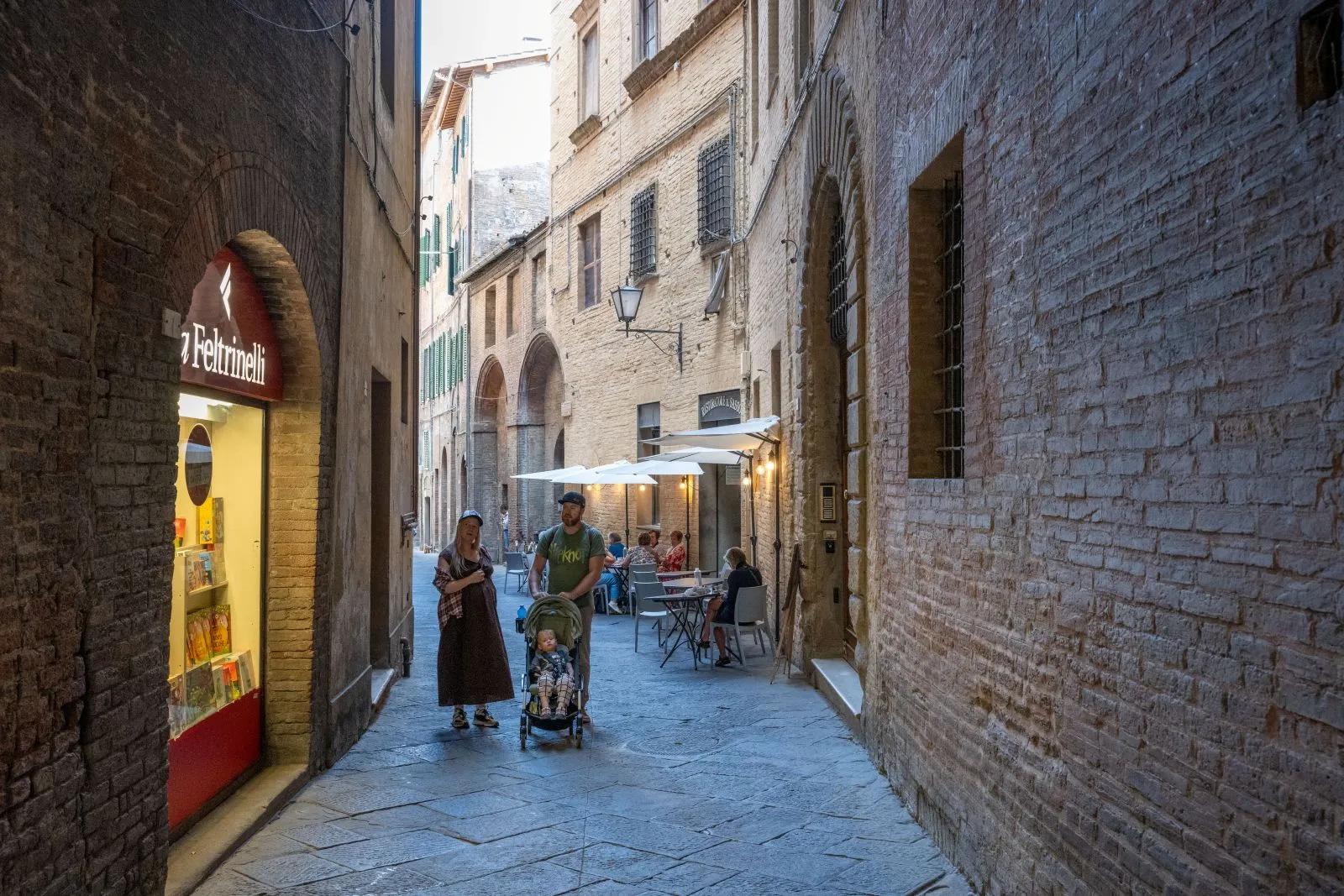
Today Via dei Rossi is a lively and busy street, with commercial activities and restaurants, keeping its role alive in the urban fabric of Siena.
The Dama Ignuda and curious details
One of the most particular elements of the street is the sculpture known as “Dama Ignuda” or “Woman at the window”, located in a first-floor window of a building along the Orbachi stretch.
The work depicts a nude female figure and is not linked to any documented historical person, an element that contributes to its charm and mystery. It was created in 1995 by Pier Luigi Olla, a sculptor and master artist from Siena known also for costumes, flags, and symbols related to the Palio di Siena.
There is also a plaque dedicated to Vittorio Alfieri on the street.
Word count: 339