Origin of the name and early attestations
The origins of the name Via di Pantaneto have two possible interpretations. The first links it to the term “pantano,” referring to an area that was once wet and muddy, characterized by the presence of water and poor drainage on rainy days.
The second hypothesis refers to the presence, in the 13th century, of the houses of the Tarlati of Arezzo, also known as “lords of Pantaneta.”
The first documentary attestations of the street date back to the 12th century. With urban development, the road took on an increasingly central role until it replaced the via di San Martino.
Historical role and urban system
Via di Pantaneto was an important urban axis linked to commercial and pilgrimage flows, with connections to the routes of the Via Francigena.
In the medieval military and civil system, there was a Compagnia di Pantaneto, one of the armed subdivisions of the city. Its emblem, initially interpreted in various forms, contributed to the birth of the symbol of the unicorn, a mythical creature that combines the characteristics of the lion and the unicorn and is linked to the identity of the Contrada del Leocorno.
Historical evolution of the street
In the post-unification period, the street underwent several modifications: in the 19th century, a section was dedicated to Bettino Ricasoli, while after World War I, a portion took the name Via Trento. Only in 1932 was the historical name of Via Pantaneto restored.
Architecture and urban heritage
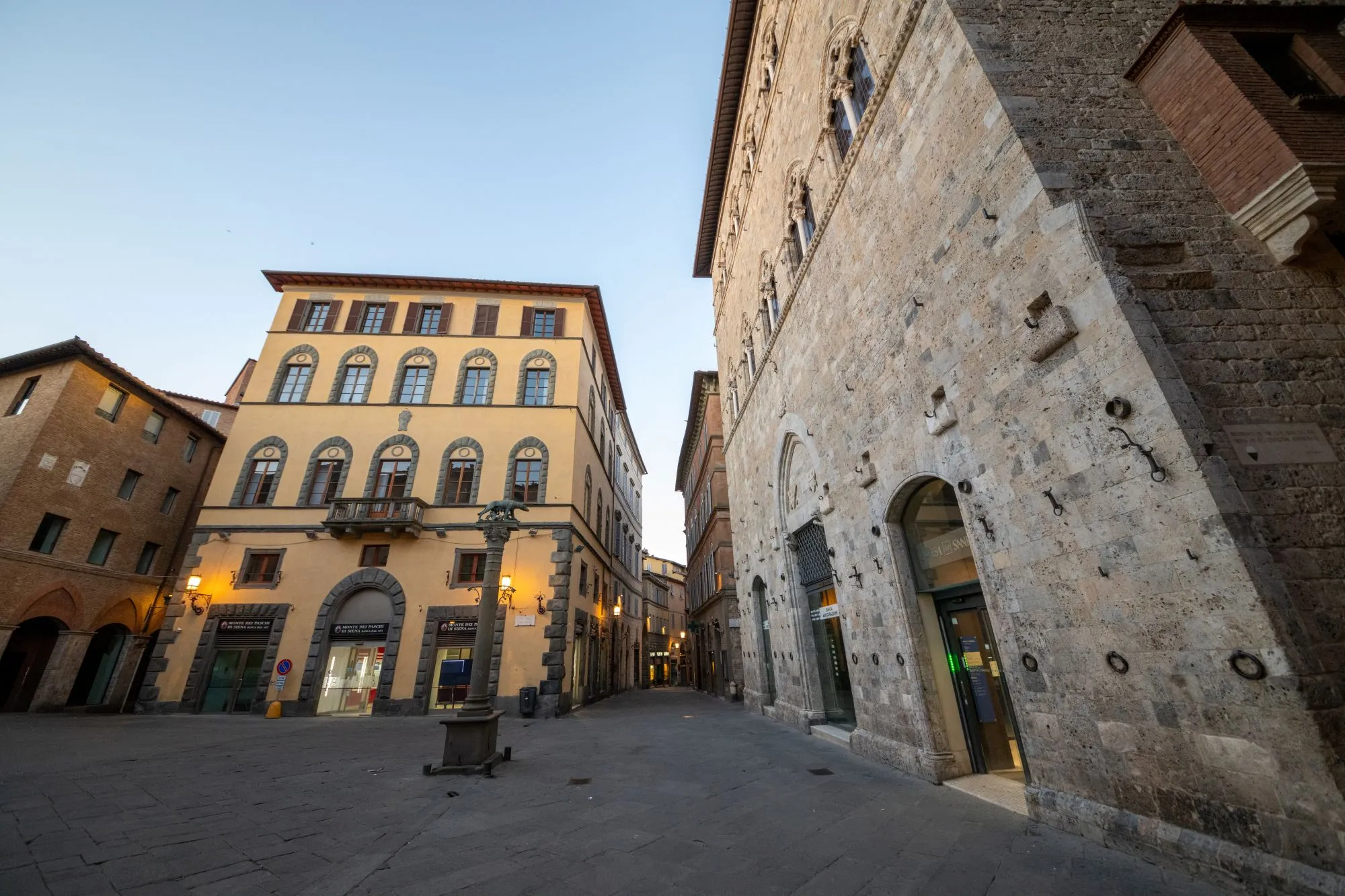
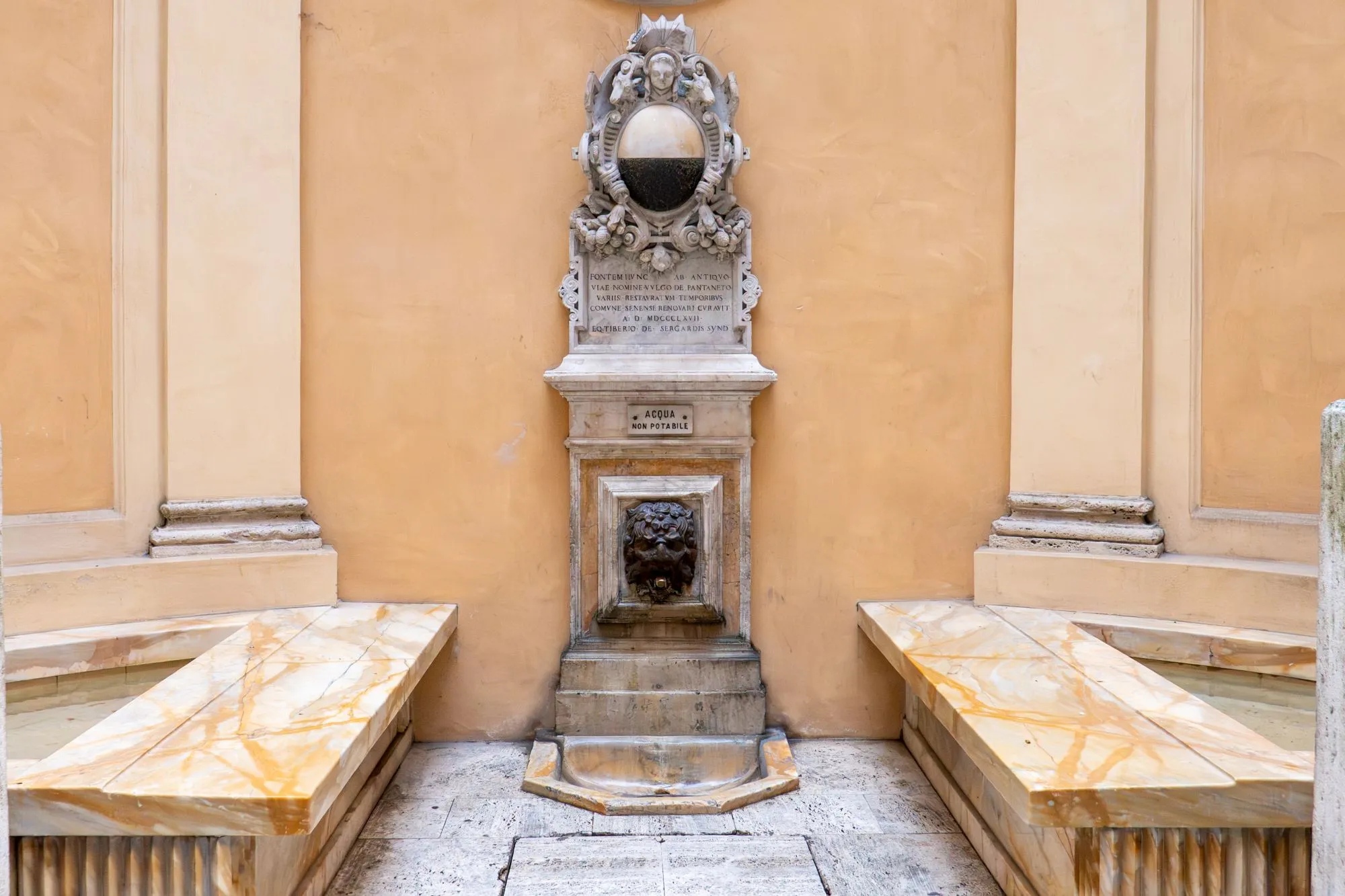
The street still preserves a rich architectural heritage made up of medieval and Renaissance palaces that belonged to noble families of Siena. Among the most significant elements are the Fonte di Pantaneto, built in the 15th century for water supply, the Arch of San Maurizio, and the Logge del Papa.
Via di Pantaneto today
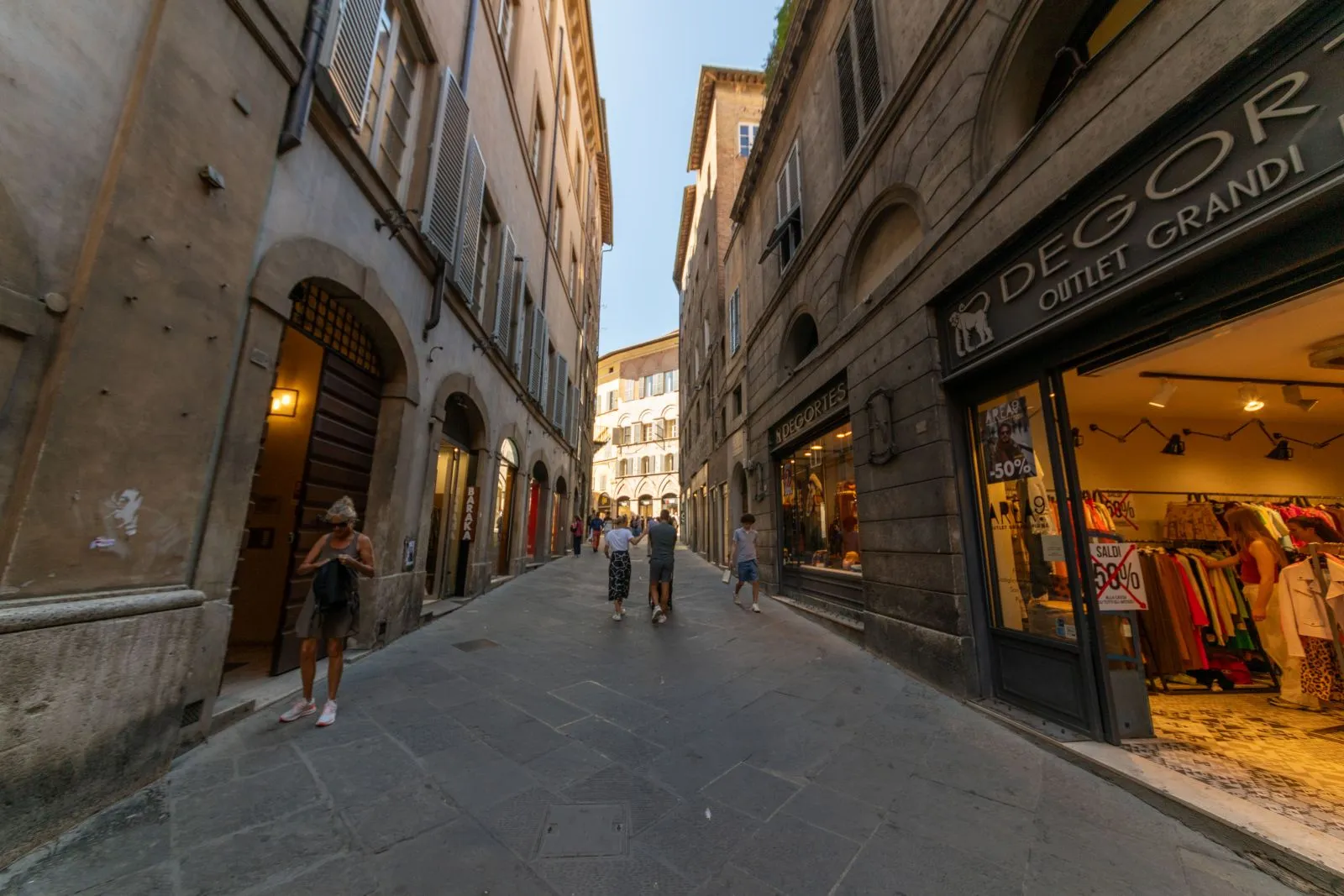
Today Via di Pantaneto is one of the symbolic places of Sienese social life, a reference point for evening life and for the meeting between residents, students, and visitors.