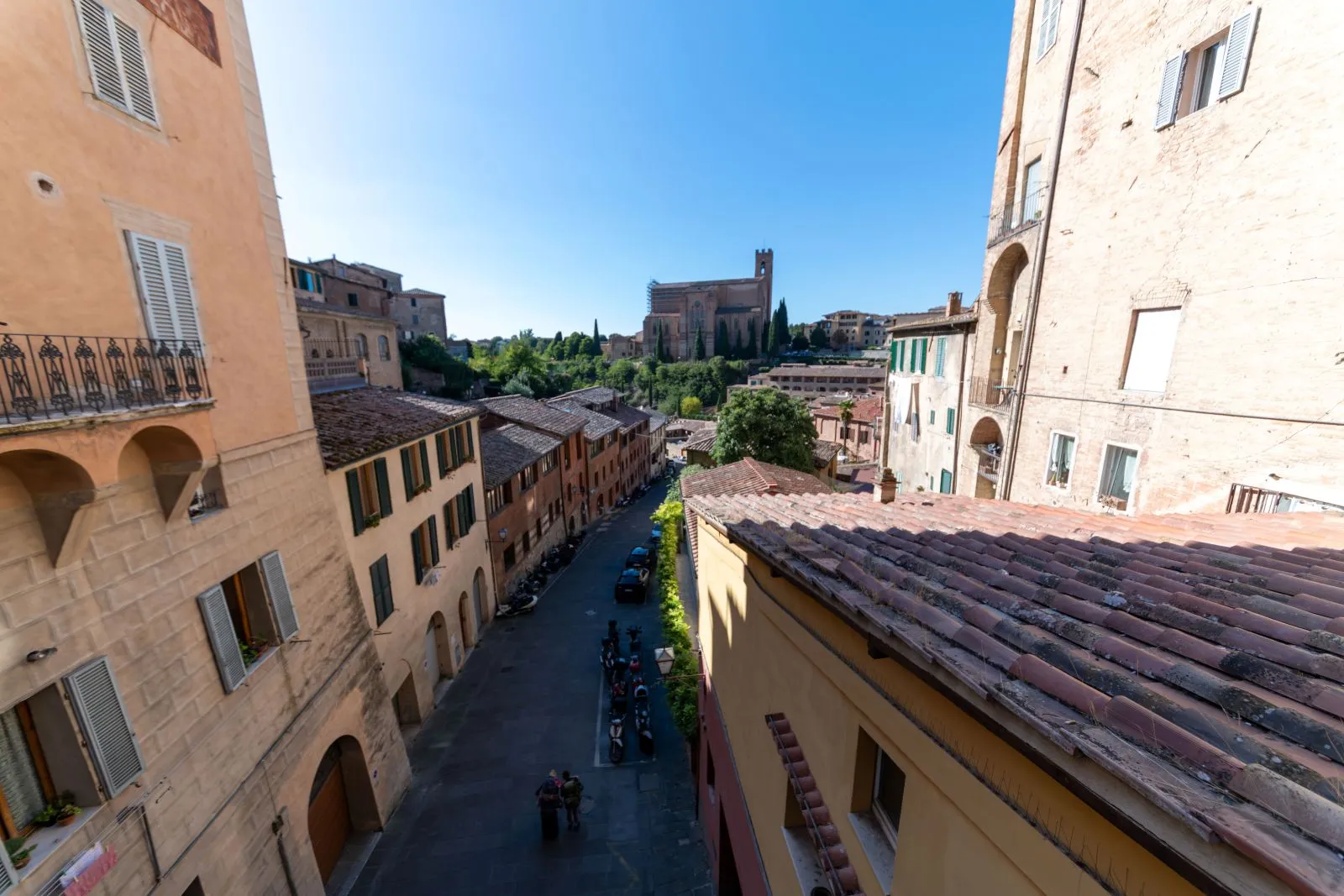
Origin of the street and historical function
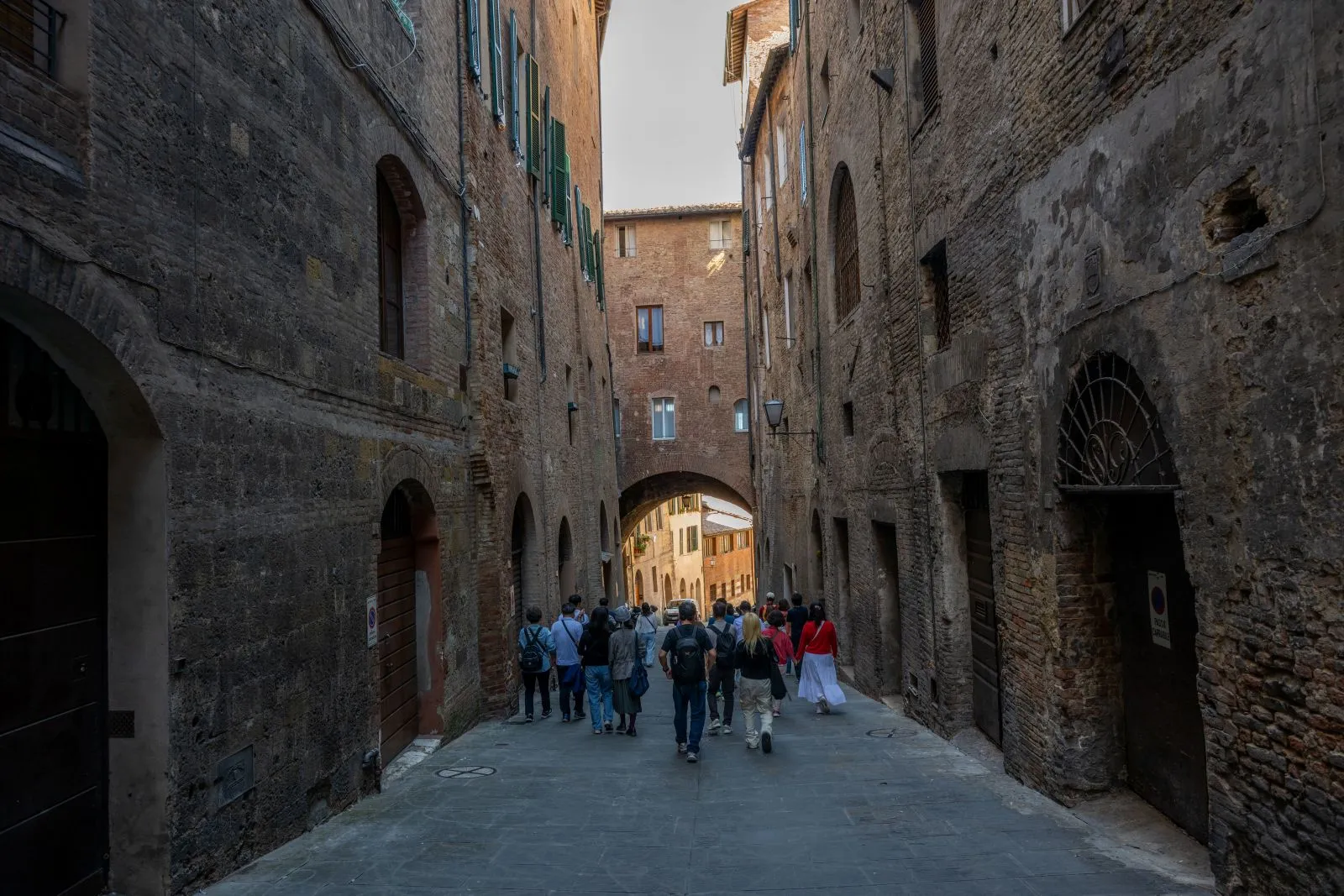
Via Fontebranda is one of the oldest and most characteristic streets of Siena and connects the historic center to the lowest area of the city. Its name derives directly from the large medieval fountain along the route, which has represented a fundamental resource for the city for centuries.
The street was already a constant passage point for citizens and artisans in the Middle Ages, who traveled it to reach the fountain and ensure water supply. The location was strategic, as Siena developed on hills without rivers, and Fontebranda represented one of the main water resources.
The Fontebranda and the water system
The fountain is one of the most important symbols of the city and its presence is documented as early as the 11th century. Over time, it has been renovated and expanded, maintaining its central function in urban life.
Water was used for daily consumption, for washing clothes, and for watering animals, becoming an essential part of the city's domestic and productive life.
Neighborhood and artisan activities
Via Fontebranda crosses a neighborhood historically linked to artisans, particularly to the Wool Guild, who used water to wash and dye fabrics. The street thus also represented a fundamental element for the city's economic life.
At the end stands the Porta Fontebranda, built in the 18th century as an entrance to the city walls, serving the purpose of access control and connection between the city and the surrounding countryside.
Via Fontebranda today
Today the street still preserves the link between medieval Siena, its artisan traditions, and contemporary life, maintaining its historical identity intact within the urban fabric.