Origins and historical context
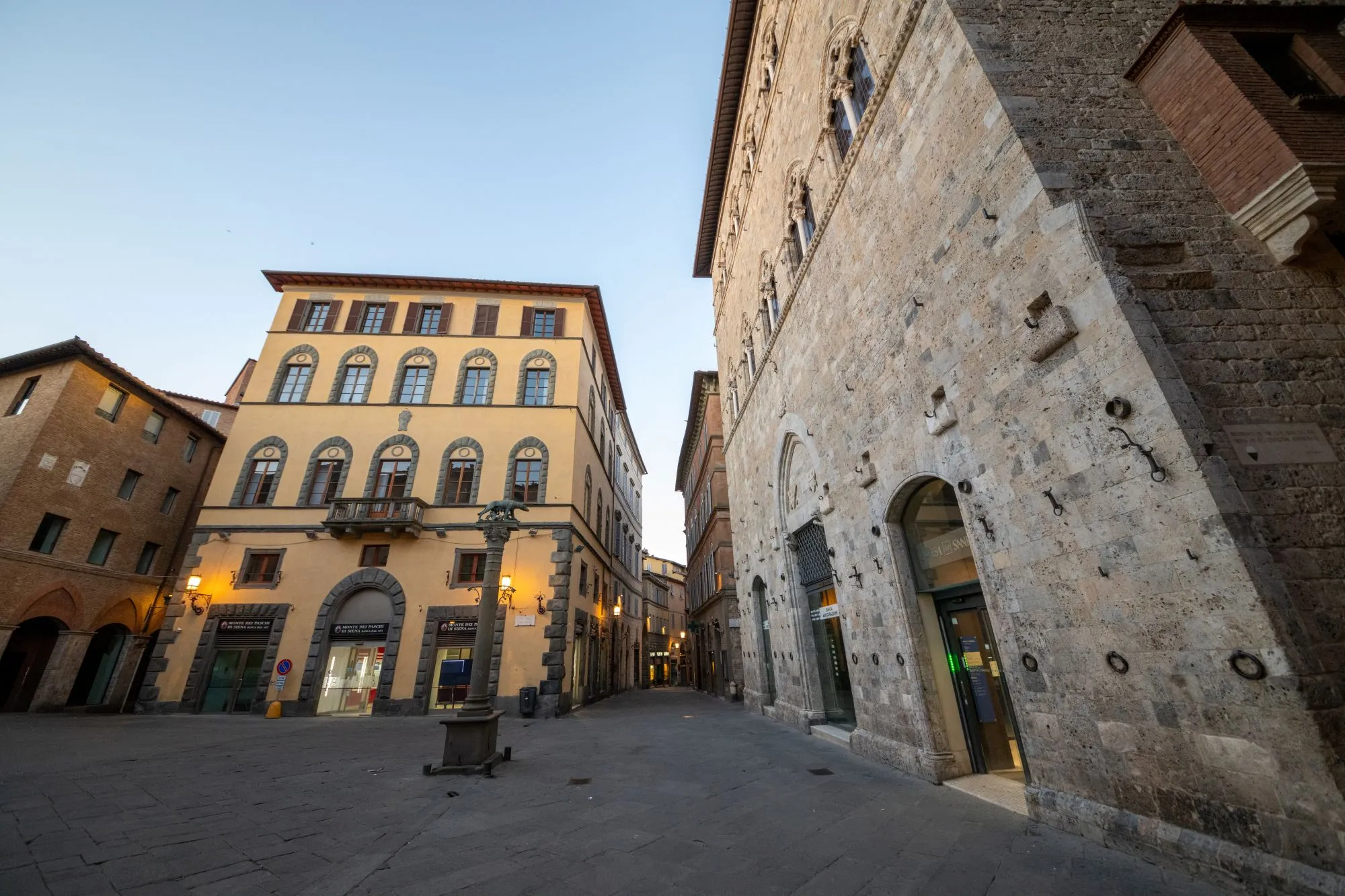
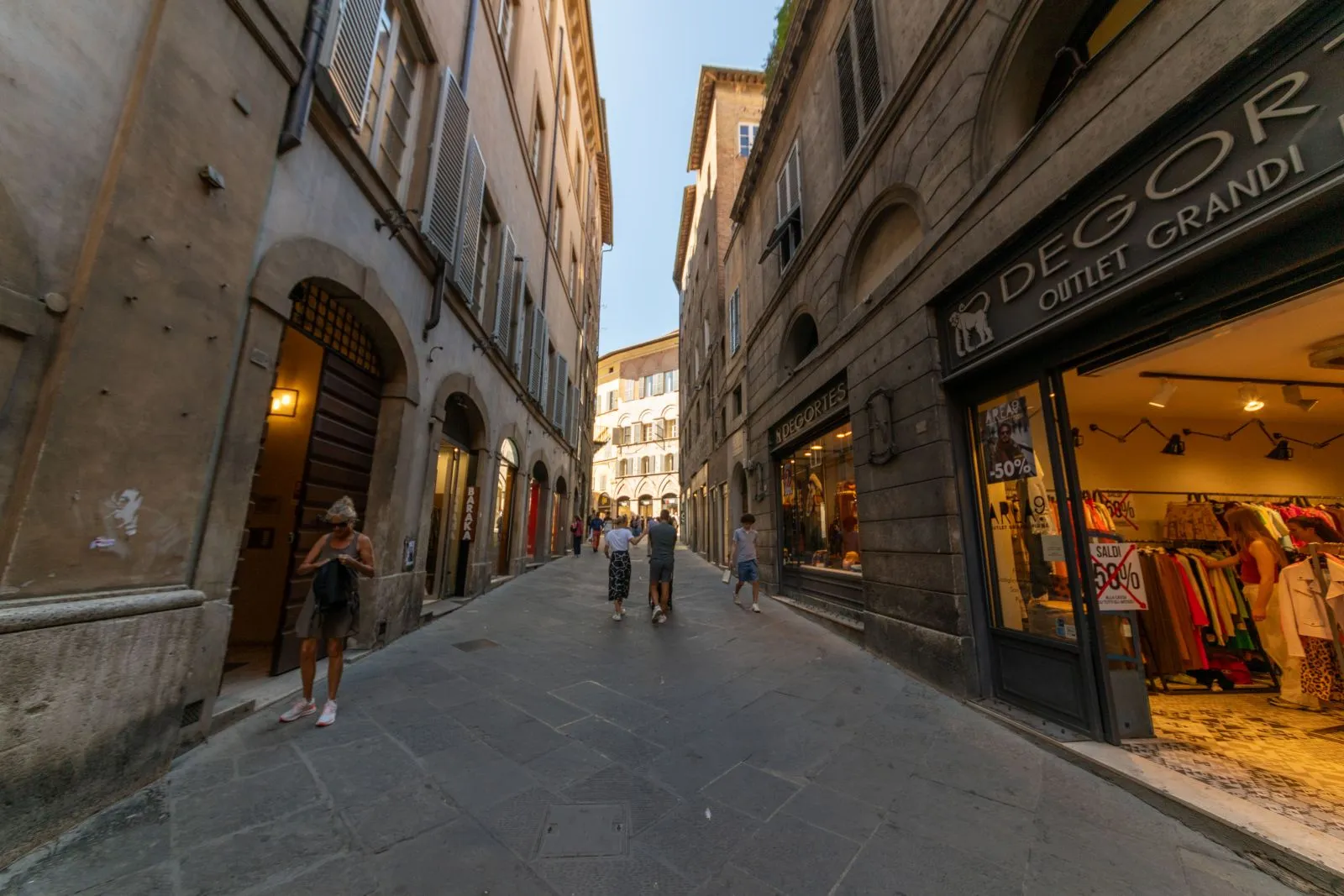
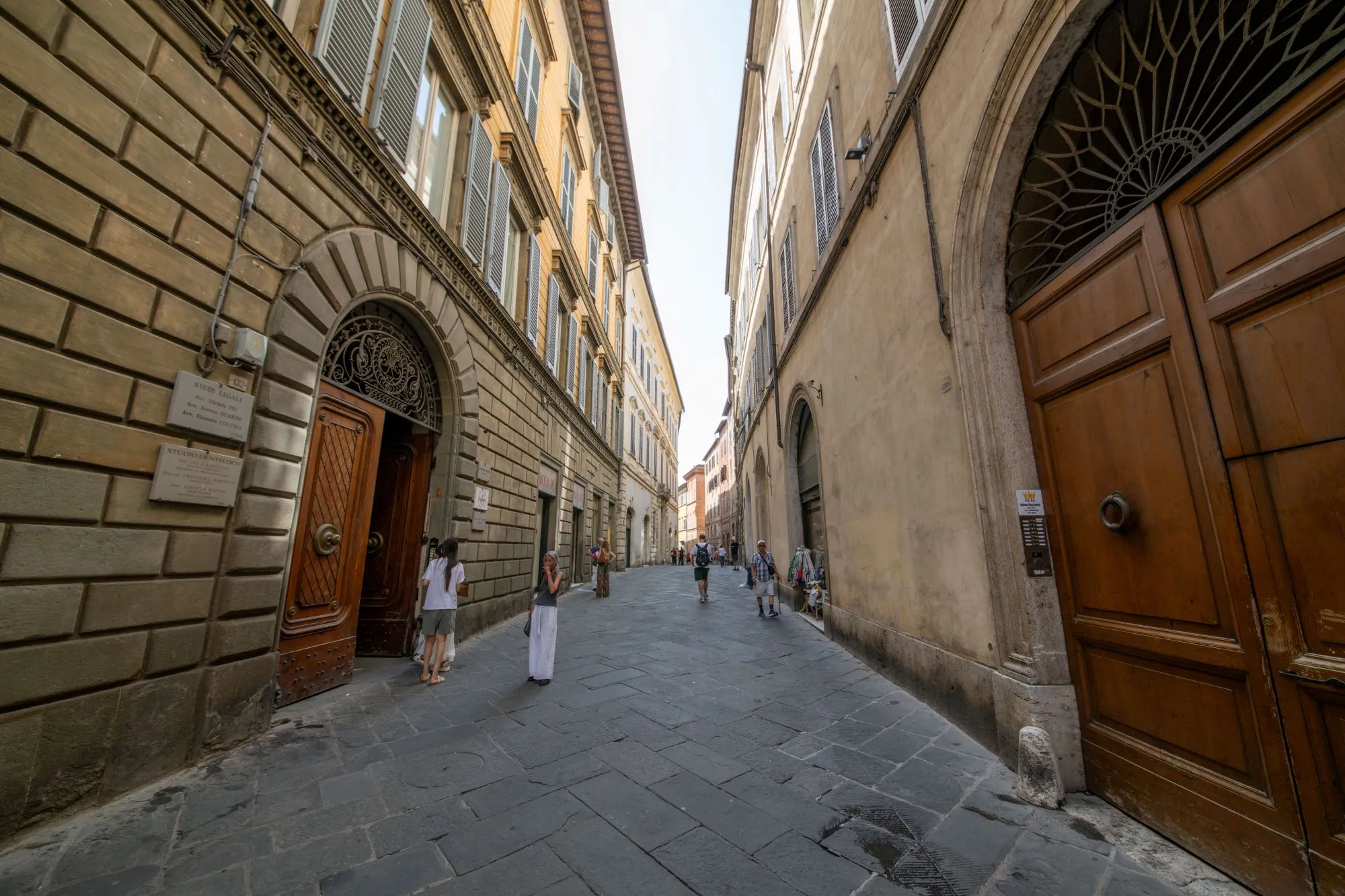
The street represents an important segment of the ancient Francigena route. The area still preserves a rich architectural heritage and develops in a stratified urban context.
A significant element is the boundary with Banchi di Sotto, marked by the presence of two medieval towers that were part of a castle now disappeared. One of these is known as “Torre dei Montanini.”
Literary memory and historical figures
Along the street, there is a plaque dedicated to Ludovico Sergardi, a Latin satirical poet known by the pseudonym Quintino Settano.
Continuing along the path, one encounters Largo Francesco Bernardi, known as “Il Senesino”, a figure linked to the Sienese musical tradition and the history of singing.
Musical tradition and historical context
In the 18th century, lyric music saw the presence of the castrati, also known as “fourth voice”, a practice that was widespread in Italy at the time and later abolished. These figures gained great notoriety in 18th-century opera.
Religious architectures
Via Montanini also hosts important religious buildings, including the Church of Sant’Andrea, the Church of Santa Maria delle Nevi, and the Oratory of Sant’Anna in Onofrio.