A narrow street, seven centuries of history
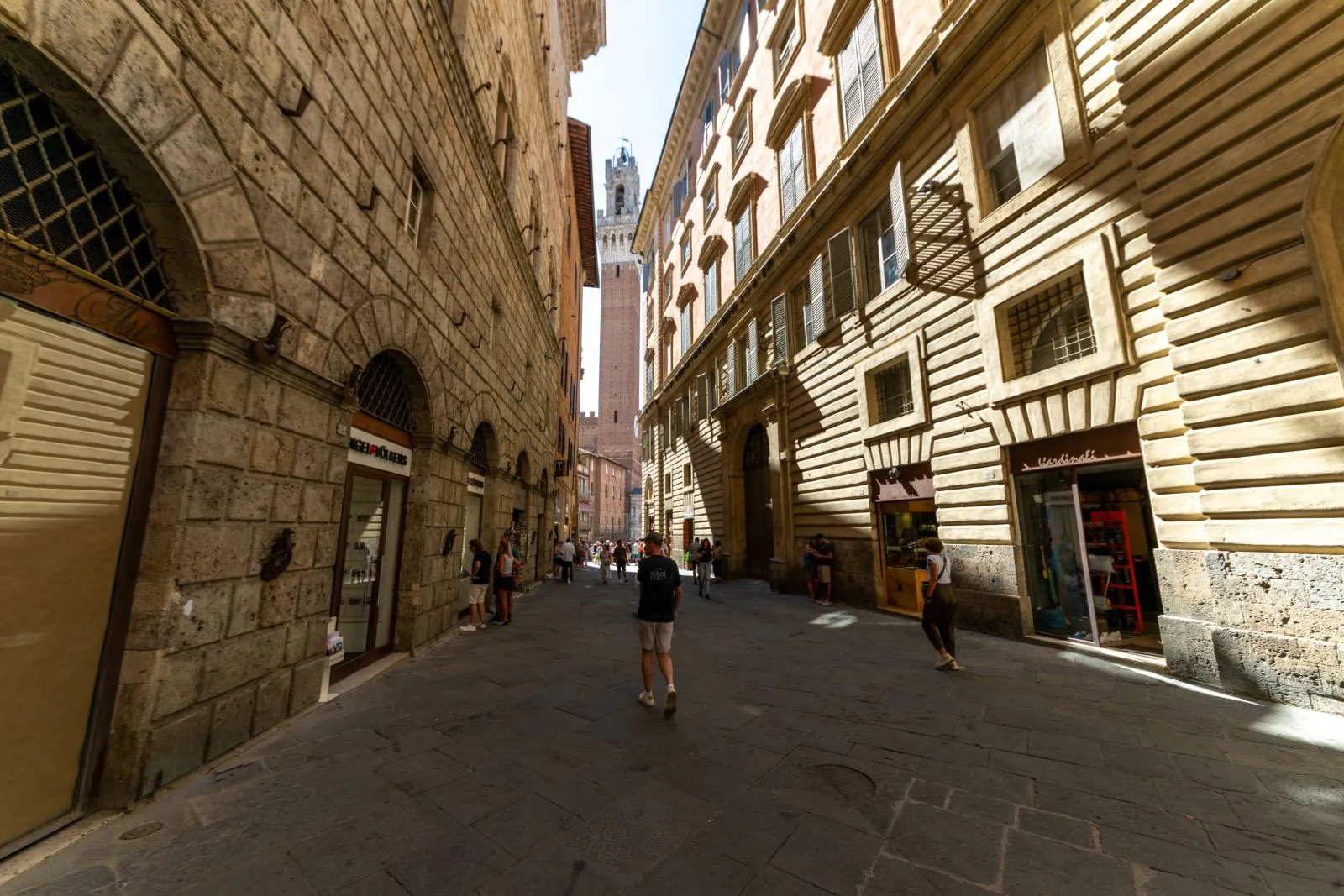
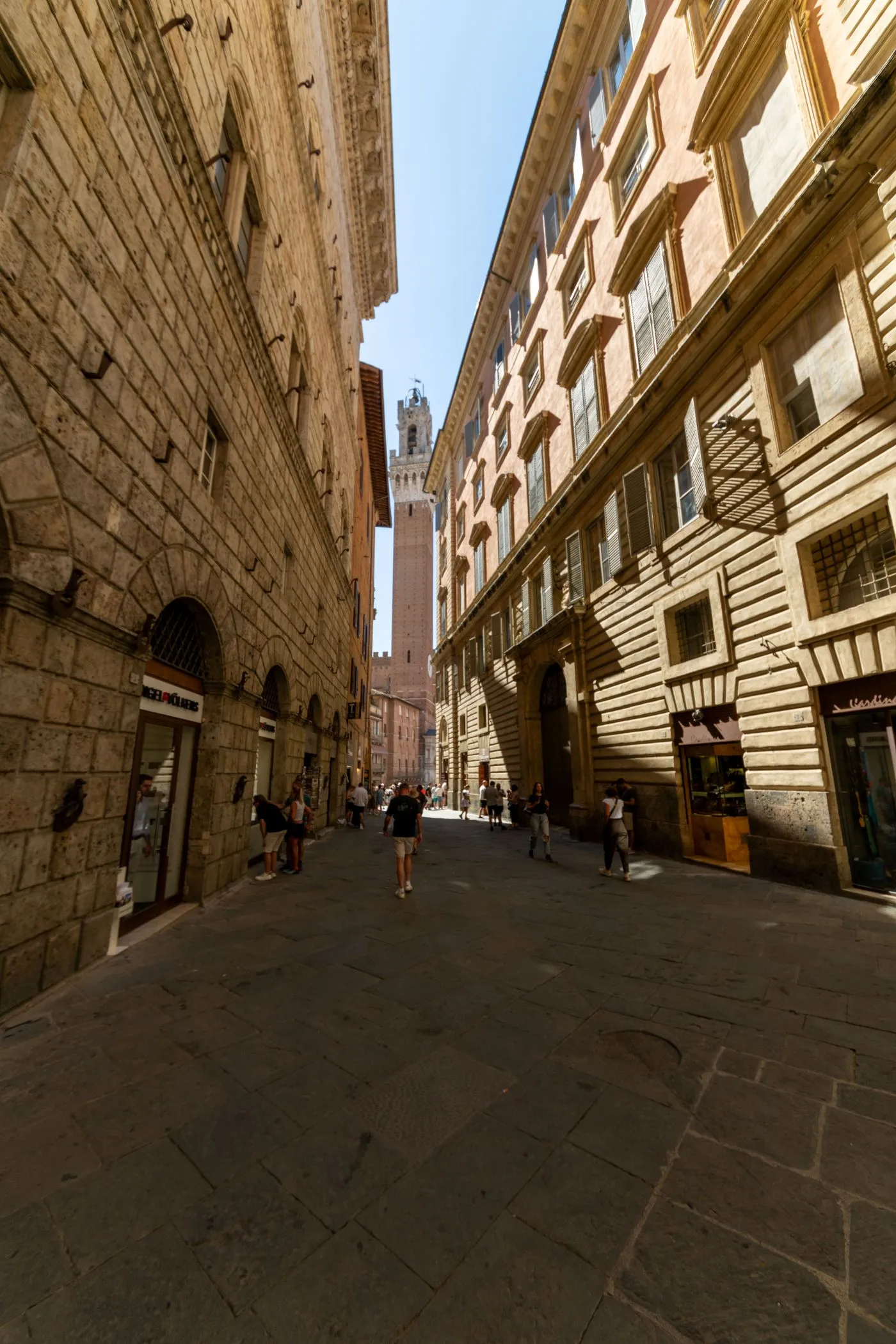
There is a moment, walking through this short passage towards Piazza del Campo, when the Torre del Mangia gradually reveals itself among the buildings, framed by the medieval architecture of the alley. It is one of the most picturesque views of Siena, and it arrives precisely where you least expect it: in Via Rinaldini, which the Sienese have always called Chiasso Largo, meaning the widest and easiest access road to the square: during the days of the Palio, the horses of each Contrada with the people following them enter the square passing through here (except for the Contrada Capitana dell’Onda).
This short street connects the commercial axis of Banchi di Sotto with the Campo, creating a natural link between two of the most important places in the city. But behind its brevity lies a very long history, made up of noble families, silk merchants, and urban transformations that have spanned centuries.
The families that lived here
The name of the street derives from the ancient family Mezzolombardi Rinaldini, who owned houses, towers, and properties here since the first half of the 13th century. Their possessions remained such until the 16th century, when they passed first to the Cennini family and then to the Zondadari, one of the most influential houses of the Sienese nobility. It was the Zondadari who profoundly transformed the area, building their palace directly facing Piazza del Campo.
The Chiasso dei Setaioli
A neighborhood of silk and wealth
In the medieval period, the street was also known as "Chiasso dei Setaioli", a testament to the strong presence of the Silk Art. Already in the early decades of the 14th century, the alley hosted workshops and warehouses dedicated to the processing and trade of silk, one of the most prestigious economic activities of communal Siena. The Table of Possessions records numerous properties of the Ugurgeri family in this area, some rented to silk weavers for very high sums: a clear sign of the wealth that this profession brought with it.
The connection with Palazzo Piccolomini
The name "Chiasso dei Setaioli" still appears in 1464, in a document related to the construction of the nearby Palazzo Piccolomini. That year, Giacomo and Andrea Piccolomini, nephews of Pope Pius II, obtained from the General Council the authorization to occupy a portion of public land to properly align the new building: a valuable testimony to the urban importance of the area already in the 15th century.
From narrow alley to Chiasso Largo
Originally, Via Rinaldini was much more narrow than it appears today. Over the centuries, numerous building interventions modified its appearance: the construction of the Palazzo Piccolomini, the demolition of the ancient tower of Mezzolombardi Rinaldini, and the building of the Palazzo Chigi Zondadari progressively enlarged the space. From here arose the popular nickname of "Chiasso Largo", already documented in the city street directory of 1789: a name that has remained, simple and direct, to this day.
Come walk through it
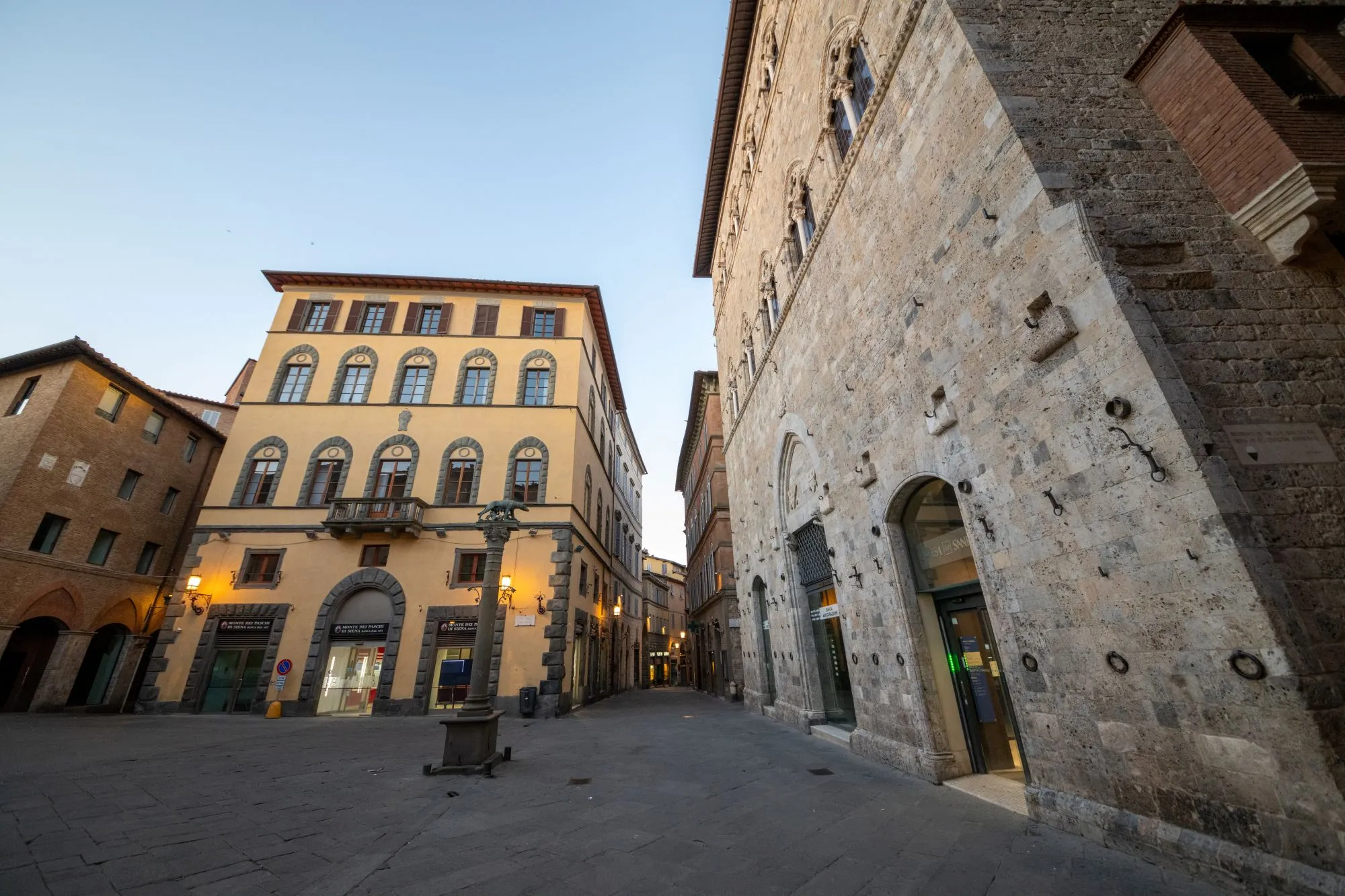
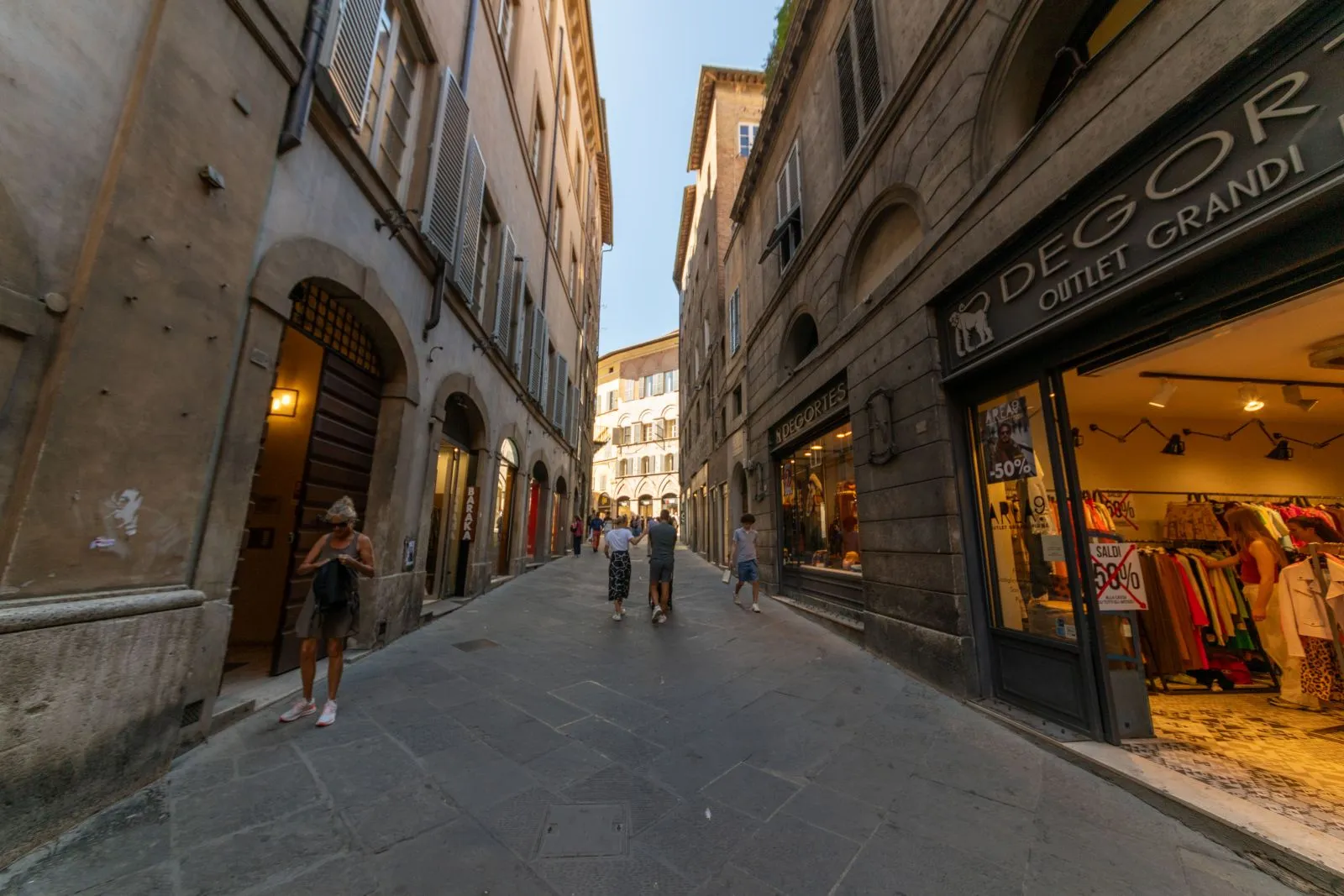
Even today, the street retains the charm of medieval Siena: brick palaces, stone portals, urban perspectives that suddenly open towards the Campo. Between Banchi di Sotto and Piazza del Campo, the historic center of Siena.