A street, a Terzo, a story that endures
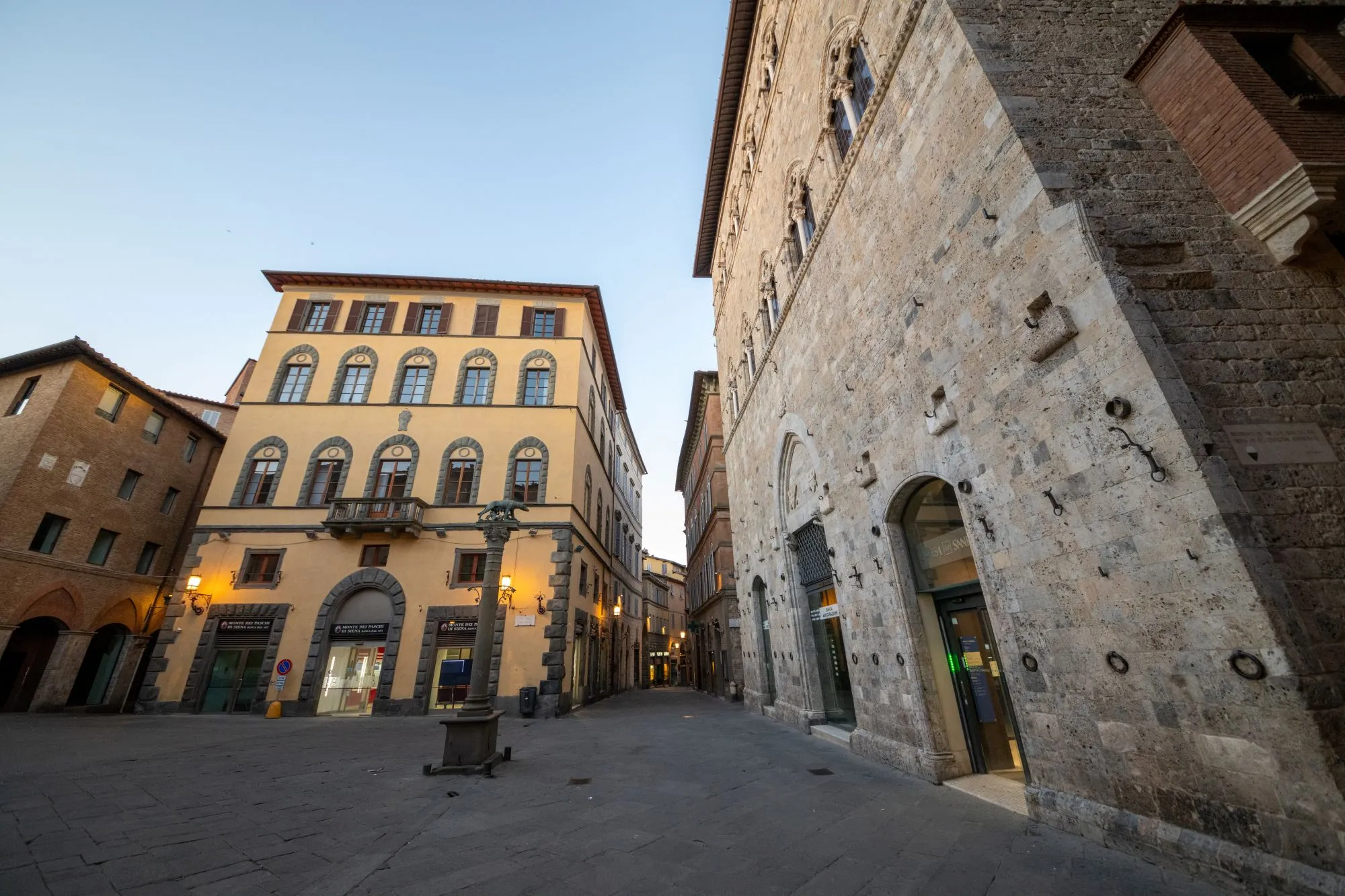
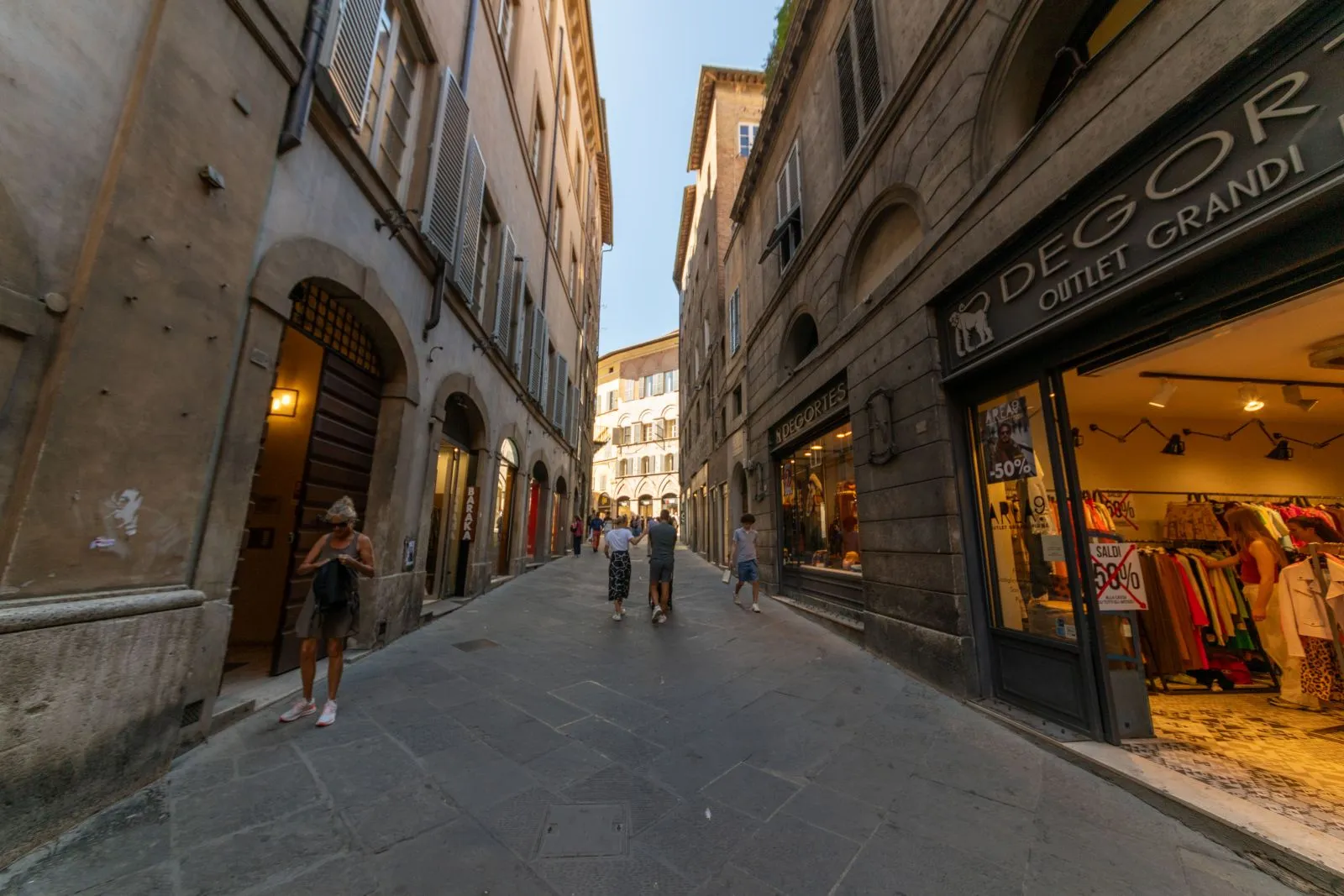
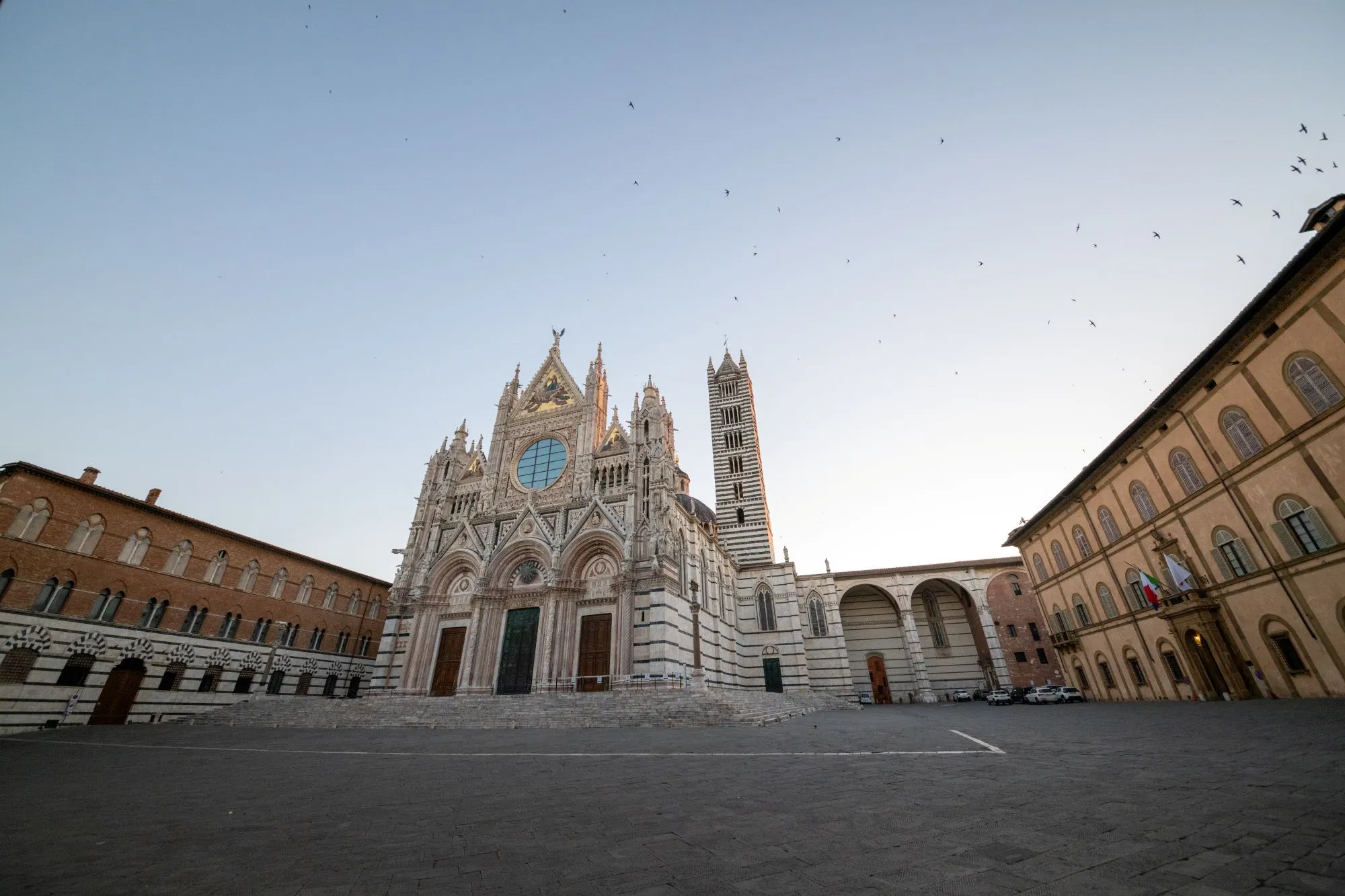
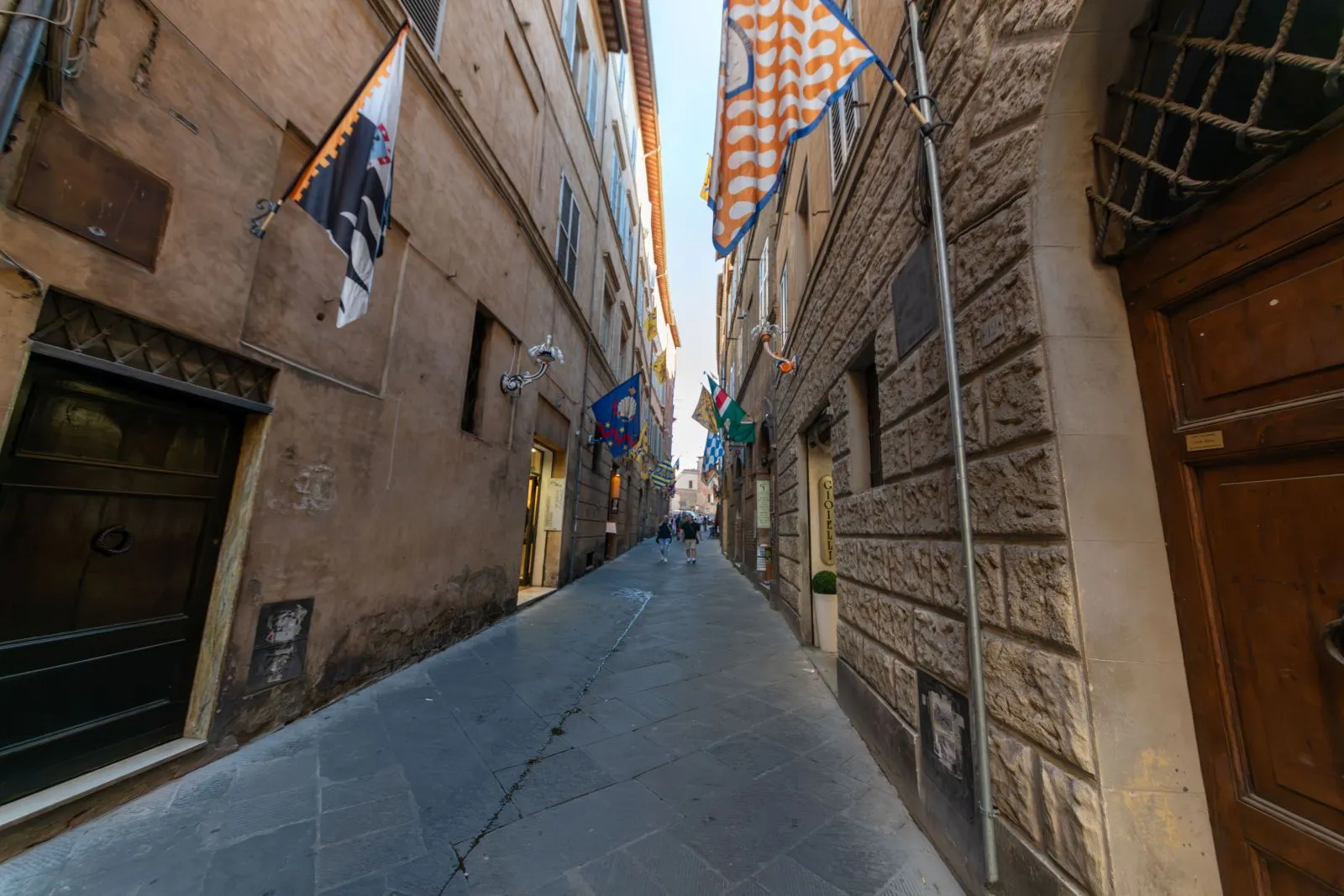
Walking in the Terzo of the City, among well-preserved medieval and Renaissance buildings, one finds oneself in Via San Pietro: a historic street that still bears the marks of centuries past. Shops, small businesses, and residences coexist with ancient architectural elements that are noticeable at every step, almost hidden among the facades, as if the street never wanted to stop being what it once was.
The Church of San Pietro alle Scale
A polyptych that has endured for centuries
Giving the street its name is the Church of San Pietro alle Scale, a religious building of 13th-century origin, a testament to the Sienese Baroque. Crossing the threshold, one finds oneself in front of a polyptych by Ambrogio Lorenzetti and Rutilio Manetti: two epochs of Sienese art coexisting in the same space, two different perspectives on the same faith. One enters out of curiosity and exits with the feeling of having seen something that few truly stop to observe.
The coat of arms that tells of an ascent
The Piccolomini and the fragment of a tombstone
Between the church of San Pietro and the Palazzo Bichi-Brigidi-Buonsignori, now home to the National Gallery, one notices a fragment of a tombstone topped by a coat of arms of the Piccolomini family. A detail that at first glance might be overlooked, but tells a lot: it indicates the ascent of the papacy of Enea Silvio Piccolomini, the future Pius II. A trace of stone that links this street to one of the most important names in Sienese history, left there for centuries waiting for someone to stop and read it.
Palazzo Chigi alla Postierla
Continuing along the street, one encounters Palazzo Chigi alla Postierla, another of the historical presences that make Via San Pietro a succession of facades that tell stories of families, power, and Sienese history. Each building has something to say, each with its own style, its own century, its own legacy.
A lived street, not a museum
Near the historic complex of Santa Maria della Scala, Via San Pietro still preserves a rare balance today: it is a inhabited street, frequented, alive, but at the same time intact in its medieval and Renaissance soul. Walking through it, one perceives that feeling found only in streets that have never transformed into postcards: a Siena that continues to exist, day after day, within the same stones as always.