A name that comes from the trees
There is an alley in Siena that carries in its name the memory of a vanished vegetation. The Vicolo degli Orbachi owes its name to the orbachi, the ancient laurels that grew abundantly in the gardens and along the cliffs of the district of Ovile. From these trees came the orbacca, the small fruit of the laurel, also known as "golden berry": a presence so rooted in the landscape that it left a lasting mark in the city toponymy.
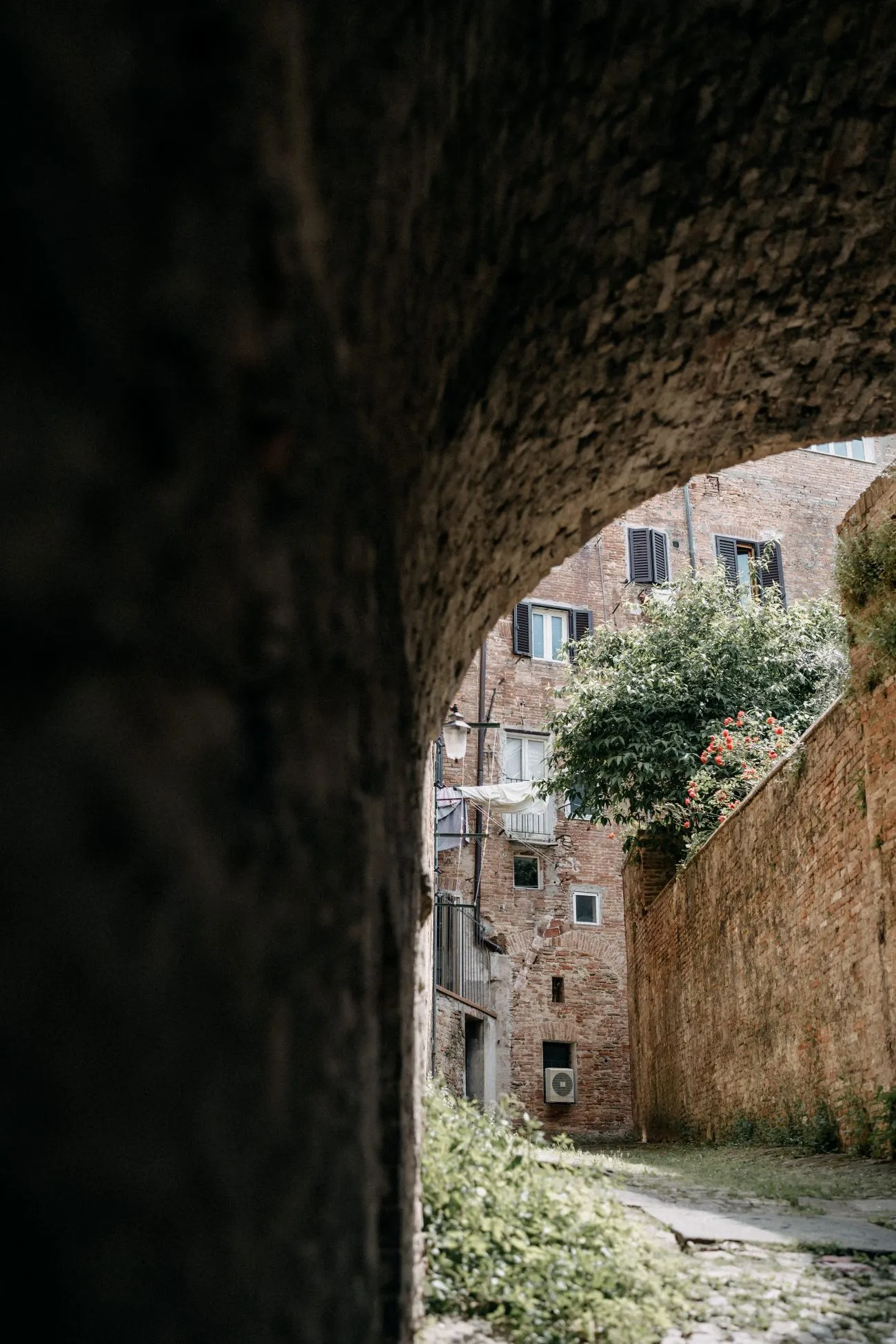
Today the alley appears as a quiet passage between ancient buildings. But for centuries it has been the scene of fascinating events, popular legends, and stories of daily life that its stones still preserve, for those who are willing to seek them out.
Two alleys in one: Orbachi di Sotto and Chiasso Buio
In the Middle Ages, the alley was divided into two distinct parts. The first, Via degli Orbachi di Sotto, descended towards the village of Ovile. The second, Via degli Orbachi di Sopra, was known by a more unsettling name: Chiasso Buio.
The name was not random. This stretch was narrow, poorly lit, and considered dangerous: it ran behind the buildings of Via dei Rossi and reached the area of the Abbadia di San Michele, on the hill of San Donato. As early as 1309, the Municipality of Siena expressed concern about the darkness of the road, which in the documents of the time was described as favorable to ambushes and assaults by wrongdoers.
The works, the closure, the atmosphere
During the 14th century, expansion and paving works were carried out to make the passage easier, brighter, and safer. But the definitive turning point came with the construction of the convent of the Discalced Carmelite Fathers of the Abbadia: the most problematic part of the alley was closed, turning it into a dead-end passage. From that moment, it maintained that particular intimate and mysterious atmosphere that still characterizes it today.
The executioner's house and the stories of the Seicento
An unsettling reputation
An ancient curiosity tells that in the Middle Ages, the executioner's house was located right in the Orbachi, a presence that contributed to the unsettling reputation of the street. A detail that explains a lot about the atmosphere this alley must have had in the evening hours.
The Seicento and popular life
In the Seicento, a well-known bawdy house was active in the alley, looked down upon by the more respectable inhabitants of the area but very frequented at the time. A story of popular life, of urban contradictions, of that Siena that never ceases to surprise when one goes beneath the surface of monuments and official traditions.
Come and discover it
Walking today in the Vicolo degli Orbachi, it is hard to imagine its eventful past. Yet every stone tells something: laurels, dark alleys, unusual characters, city life.
Seek it out, cross it, stop. Certain alleys are not visited: they are listened to.
At the end of Via dei Rossi intersecting Via del Comune, Terzo di Camollia, Siena.