Description and urban context
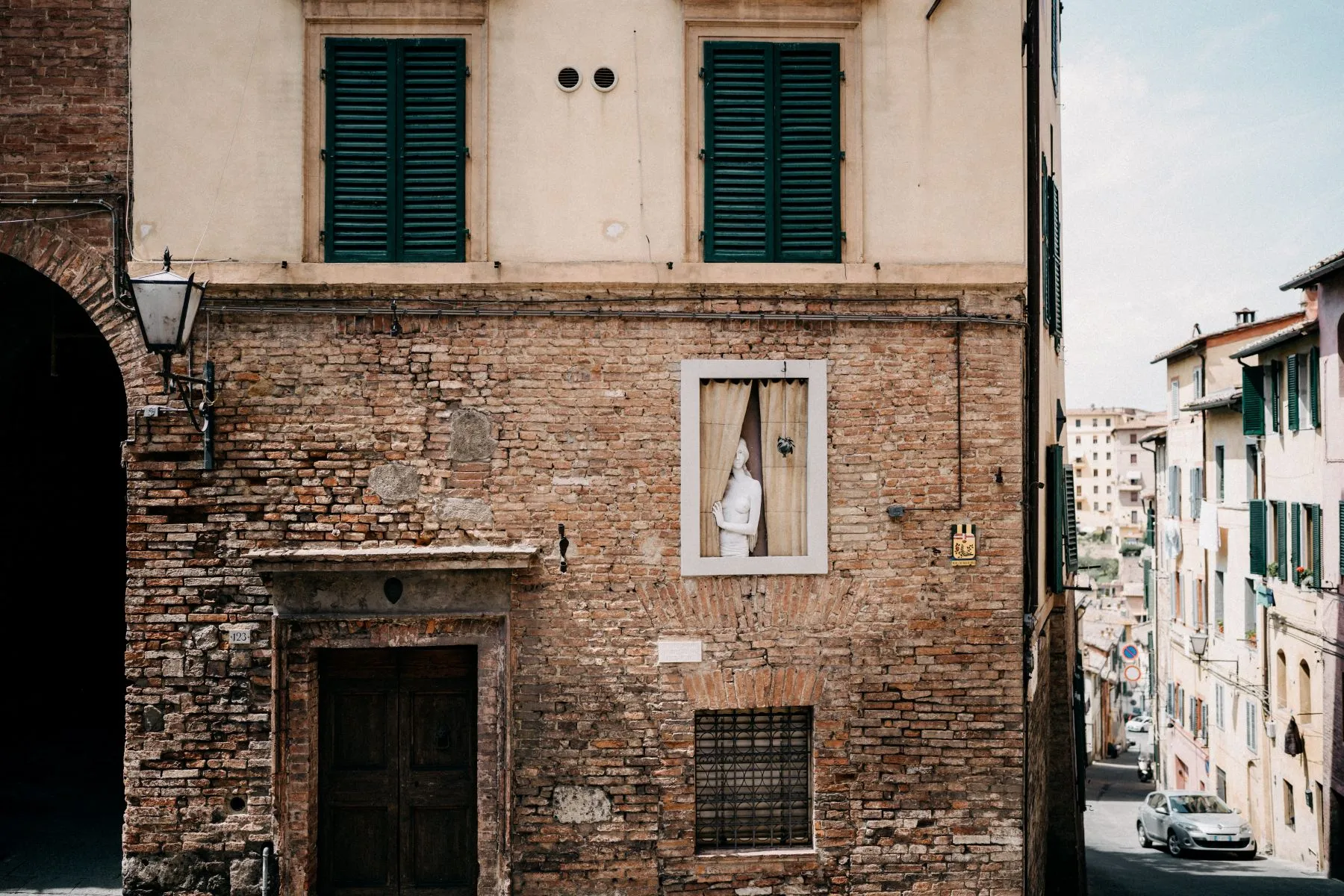
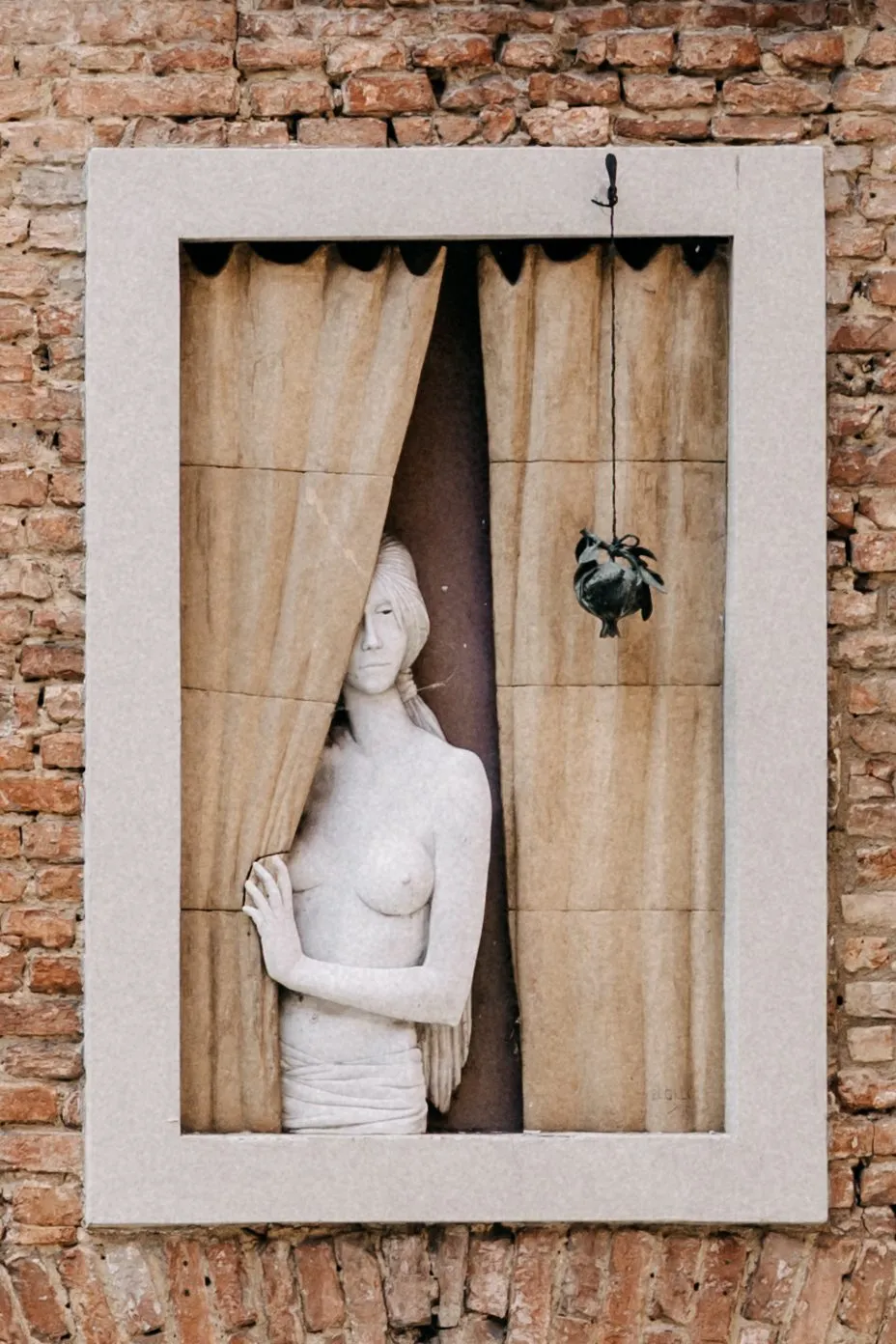
The Woman at the Window is located on Via dei Rossi, one of the oldest streets in Siena. It is a small sculpture set in a niche that resembles a window, a typical element of medieval Sienese architecture designed to enliven the facades of buildings and create a dialogue with the street.
The female figure features a delicate face, a veil framing the head and a composed expression, characteristics that evoke medieval artistic sensitivity. The work can be dated between the 13th and 15th centuries, a period when it was common to decorate buildings with symbolic or narrative figures.
The author is unknown: it is likely the work of a local master stonecutter active in the Sienese workshops of the time.
Origin and interpretations
The sculpture may have originated as an ex-voto, as a protective symbol for the house or as a decorative element related to the family owning the palace.
Over time, various popular interpretations have emerged. One legend tells of a young woman waiting for the return of her beloved who went to war, while another tradition describes her as a figure punished for her curiosity, transformed into a moral admonition.
Symbol of the city
Whatever its origin, the Woman at the Window is now considered a poetic symbol of Siena. It is a detail that tells the silent life of medieval streets and the untold stories of the past.
Its location, along a narrow street rich in historic buildings, means that many discover it by chance, looking up while passing by. It is one of the most photographed spots in the historic center, loved by those seeking hidden corners away from the more traveled paths.